Table of Contents
- Signs You Need Expert Leak Detection Services
- How to Find Hidden Pipe Leaks Without Invasive Damage
- Advanced Leak Detection Technology in 2026
- Understanding the Cost of Water Leak Detection
- Slab Leak Detection and Underground Pipe Inspection
- Why Professional Detection Prevents Structural Damage
- Insurance Documentation and Long-Term Leak Prevention
- Frequently Asked Questions
Last Updated: September 27, 2026
Signs You Need Expert Leak Detection Services
Water leaks cost homeowners thousands in damages every year. The problem isn’t always obvious. A small drip behind a wall can go undetected for months, causing structural damage and mold growth long before you notice anything wrong. Knowing when to call for expert leak detection services separates homeowners who catch problems early from those who face expensive repairs later.
The most common warning signs appear gradually. Your water bill climbs without explanation. You hear water running inside walls when no fixtures are in use. Walls or ceilings show soft spots, discoloration, or peeling paint. Floors become warped or buckle. These symptoms point to hidden water leaks that demand professional attention.
Some leaks hide in plain sight. Persistent musty odors suggest moisture accumulation. Mold spots appear in corners or under sinks. Your water meter keeps running even when all fixtures are off. Homeowners who act on these signs avoid structural damage and the exponential costs that follow delayed repairs.
The challenge is distinguishing between minor condensation and serious leaks. Professional leak detection services eliminate guesswork using acoustic detection, thermal imaging, and pressure testing to pinpoint exact leak locations without invasive damage to your home.
How to Find Hidden Pipe Leaks Without Invasive Damage
Finding hidden pipe leaks once meant tearing open walls and ceilings. Modern non-invasive leak detection technology changed that equation entirely. Today, professionals locate leaks with precision, preserving your home’s structure and saving money on unnecessary demolition.
The first step is visual inspection. Professionals examine accessible areas for obvious signs: wet spots, corrosion, or mineral deposits around pipe connections. They check water meters and review your usage patterns. This baseline work often reveals leaks in plain view.
When visual inspection doesn’t find the source, acoustic detection takes over. Specialized listening equipment picks up the sound of water escaping from pressurized pipes. The technician moves the sensor along walls and floors, triangulating the leak’s location by comparing sound intensity at different points. This method works exceptionally well for main line leaks and underground pipe issues.
Thermal imaging adds another dimension. Infrared cameras detect temperature differences created by flowing water. A leak produces a distinctive cold spot on the wall or floor. The thermal image shows exactly where the temperature anomaly exists, pinpointing the leak without guessing.
Pressure testing confirms suspicions. Technicians pressurize the system with inert gas or air and listen for escapes. This method works particularly well for slab leaks and underground utility lines where other methods struggle.
The beauty of non-invasive detection is cost-effectiveness. You pay for diagnosis, not demolition. These technologies identify problems before they become structural disasters, giving homeowners peace of mind and protecting their property investment.
Advanced Leak Detection Technology in 2026
Leak detection technology has advanced dramatically. What took hours now takes minutes. What required destruction now requires only precision instruments.
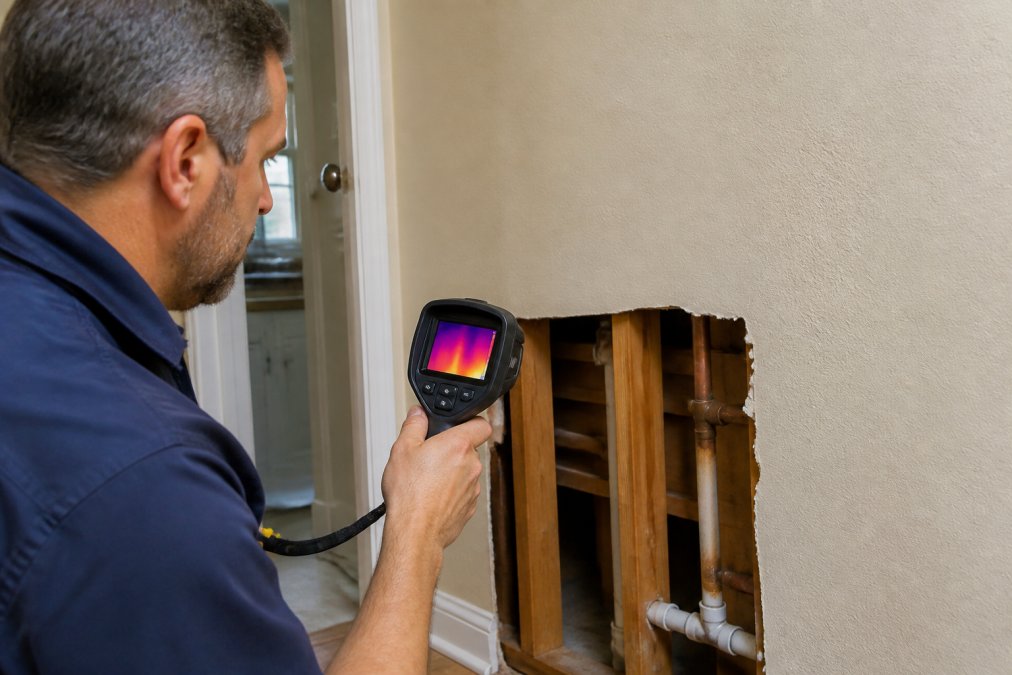
Acoustic Detection and Thermal Imaging
Acoustic detection and thermal imaging work best together. Acoustic sensors locate the leak by sound; thermal imaging confirms the location and shows the extent of water damage already present. Combined, they provide a complete picture of the problem.
Acoustic equipment operates on the principle that water under pressure makes noise as it escapes. The sound travels through pipes and building materials. A trained technician listens through headphones while moving the sensor methodically across suspect areas. When the sound peaks, the leak is directly below.
Thermal imaging uses infrared technology to see temperature differences invisible to the human eye. Water leaks create cold zones as escaping water cools surrounding materials. The camera displays these zones in vivid color, making the leak location unmistakable. The technology penetrates drywall and flooring without requiring holes or access panels.
Video Pipe Inspection and Pressure Testing
Video pipe inspection sends a small camera through your pipes to see internal conditions. The camera travels the entire length, showing mineral buildup, cracks, tree root intrusion, or blockages. This technology answers questions about pipe integrity that acoustic and thermal methods cannot.
Pressure testing pressurizes the system to detect leaks that aren’t actively flowing. The technician introduces inert gas or compressed air, then listens for escapes. If pressure drops over time, a leak exists. This method pinpoints slab leaks and main line breaks with certainty.
Understanding the Cost of Water Leak Detection
The cost of water leak detection depends on several factors: the complexity of your plumbing system, the suspected leak location, and the technology required. Simple diagnostics cost less than comprehensive inspections. IRC Plumbing provides transparent assessments and detailed quotes before any work begins.
The real savings come from early detection. A leak found and repaired early costs less than a leak discovered after months of water damage. Structural repairs, mold remediation, and insurance claims can be significantly more expensive than professional detection. Think of detection services as preventative investment, not expense.
Many homeowners ask about balancing detection costs against repair costs. Water damage compounds rapidly. Professional diagnosis can help prevent a cascade of expenses.
Slab Leak Detection and Underground Pipe Inspection
Slab leaks occur beneath concrete foundations. These leaks are invisible but devastating. Water gradually undermines the foundation, causing settling, cracks, and structural failure. Detecting slab leaks early prevents catastrophic damage.
Slab leak detection uses acoustic listening, thermal imaging, and pressure testing. Technicians listen for water sounds beneath the concrete. Thermal cameras detect the warm spot where water escapes into cooler soil. Pressure tests confirm leaks when other methods are inconclusive.
Underground utility lines present similar challenges. Main water lines run beneath yards and streets. When these pipes fail, water damage spreads across large areas before surfacing. Professional inspection locates underground leaks and assesses pipe integrity without excavation.
Video inspection through underground pipes reveals internal conditions. Root intrusion, mineral deposits, and corrosion become visible. This information guides decisions about repair versus replacement for aging infrastructure.
Why Professional Detection Prevents Structural Damage
Structural damage from water leaks develops silently. Wood absorbs moisture and weakens. Drywall deteriorates. Concrete corrodes. Mold colonizes hidden spaces. By the time visible damage appears, significant structural compromise has already occurred.
Professional leak detection catches problems before they become structural emergencies. Early intervention limits water exposure to days or weeks instead of months or years. Limited exposure means limited damage. Limited damage means lower repair costs and preserved property value.
The connection between early detection and structural protection is direct. A leak detected and repaired in its first week causes minimal damage. The same leak discovered six months later may require foundation repair, structural reinforcement, or mold remediation. Professional detection services pay for themselves through damage prevention alone.
Insurance Documentation and Long-Term Leak Prevention
Using Professional Leak Reports for Insurance Claims
When water damage occurs, insurance claims require documentation. Professional leak detection provides this documentation in formats that insurance adjusters expect and understand. Thermal images, acoustic readings, video inspection footage, and pressure test results create a clear, defensible record of the leak’s location, severity, and timing.
Insurance companies often require documentation that a leak existed and what damage resulted. Professional leak detection reports can provide this documentation. This documentation can strengthen insurance claims.
The report can include dated photographs and thermal images showing the leak location, video inspection footage showing pipe condition, and pressure test results. Proactive documentation can signal credibility and potentially reduce the likelihood of claim denial or reduction.
If you suspect a leak, obtaining professional documentation can create an official record that may support your claim.
Preventative Maintenance: Reducing Leak Frequency and Cost
Long-term leak prevention starts with understanding your plumbing system’s vulnerabilities. Professional inspections reveal which pipes are at highest risk: aging copper showing pinhole corrosion, galvanized steel with mineral buildup, or PVC under high pressure stress. Knowing these vulnerabilities allows targeted maintenance and planned replacement before emergencies occur.
A preventative maintenance program can include:
Annual inspections to detect developing leaks before they cause damage. This can help catch pinhole corrosion in copper pipes, micro-fractures in joints, and pressure anomalies that precede major breaks.
Water pressure regulation to maintain appropriate PSI. High pressure can accelerate pipe degradation and increase leak frequency. A pressure-reducing valve can help prevent leak damage.
Descaling and chemical treatment to remove mineral buildup in hard-water areas. Mineral deposits can restrict flow, increase pressure, and accelerate corrosion (Hardness of Water). Professional descaling can extend pipe life.
Pipe material assessment to identify which sections may need proactive replacement. Knowing your pipe age and material can allow for planned replacement during convenient times rather than emergency replacement during a crisis.
Seasonal inspections before winter and after spring thaw, when temperature fluctuations stress pipes and freeze-thaw cycles cause micro-fractures.
The cost-benefit analysis often favors prevention. Professional leak detection services can enable a preventative approach, protecting your investment and your peace of mind by shifting from reactive emergency response to proactive risk management.
Frequently Asked Questions
What are the signs that you need expert leak detection services?
Look for unexplained increases in your water bill, soft spots in walls or ceilings, musty odors, visible mold or discoloration, or the sound of running water when all fixtures are off. These indicate hidden leaks within your plumbing infrastructure that require professional diagnosis. A licensed technician uses non-invasive methods to pinpoint the exact location without causing additional water damage mitigation issues.
How do experts identify hidden pipe leaks without damaging walls?
Professional leak detection services use acoustic detection, thermal imaging, and moisture mapping to locate leaks without invasive cuts. Acoustic sensors pick up the sound of water escaping from pipes, while thermal cameras detect temperature variations. Video pipe inspection allows technicians to see inside pipes directly. These diagnostic accuracy methods ensure your walls and flooring remain intact while identifying the leak source precisely.
What technology do expert leak detection services use in 2026?
Modern leak detection combines acoustic detection, thermal imaging, and video pipe inspection to provide visual confirmation of pipe integrity. Pressure testing measures water system performance. These tools work together to deliver leak pinpointing without requiring destructive exploration. The combination ensures licensed technicians can identify both visible and hidden water leaks efficiently.
Is leak detection covered by homeowners insurance?
Coverage depends on your specific policy and whether the leak caused damage. Many homeowners insurance policies cover water damage from sudden, accidental leaks but may exclude gradual leaks or those from lack of maintenance. Document the leak detection process and findings for your insurance claim. Contact your insurer before scheduling service to understand what’s covered. Professional documentation from a licensed technician strengthens your claim significantly.