Last Updated: November 14, 2026
Quick Summary
Moving a kitchen sink is worth it when the new location changes how you actually use the kitchen, and a moving kitchen sink decision should start with that workflow question. If the move fixes a real layout problem, the cost is usually justified. If it only changes the view, it rarely is.
- Ask whether the current spot forces you to cross the kitchen while cooking.
- Moves within about 1 to 3 feet on the same wall are usually the least expensive.
- Drain lines must keep a consistent downward slope toward the main line.
- Cabinet, countertop and flooring work often adds to the total cost of a move.
- Ask for an on-site assessment covering drain route, vent path and access method.
Table of Contents
- Is Moving a Kitchen Sink Worth the Cost?
- How Far Can I Move My Kitchen Sink?
- Moving Kitchen Sink to Another Wall Cost: What Drives the Price
- Can You Move a Sink Without Moving the Plumbing?
- Keep-Versus-Move Comparison: Pros and Cons
- Kitchen Remodel Plumbing Permit Requirements in Sebastian, FL
- Booking a Plumber Assessment Before You Commit
- Frequently Asked Questions
Is Moving a Kitchen Sink Worth the Cost?
Moving a kitchen sink is worth it when the new location changes how you actually use the kitchen, and a moving kitchen sink decision should start with that workflow question. Homeowners often ask this question when a remodel is already underway and the sink is the last big decision.
The real cost is more than the plumber’s labor. Relocating a sink involves new drain lines, supply lines, a vent connection, possible cabinet and countertop work, and patching the floor or wall afterward. Those pieces add up quickly, so it helps to decide what problem the move is solving before you request an estimate.
Ask yourself three questions. Does the current spot force you to cross the kitchen to reach the sink while cooking? Is the sink fighting with a window, a corner or a traffic path? Will the new spot work with the cabinets and appliances you already plan to keep? If you answered yes to at least two, a move is likely worth the expense.
How Far Can I Move My Kitchen Sink?
There is no single maximum distance, but plumbers generally bucket sink moves into three ranges, and each range changes the scope of work and the cost:
- Short shift (roughly 1 to 3 feet along the same wall): The existing drain and supply stubs can often be extended with couplings and short runs. Cabinet modifications are usually minor, and the floor or wall opening is small. This is the least expensive category.
- Moderate move (roughly 3 to 8 feet, same wall or adjacent wall): The drain run gets longer, so the plumber has to confirm the new route can still hold slope all the way to the main line. Supply lines are extended, and the vent may need to be reworked. Cabinet and countertop work is almost always involved.
- Long move or cross-room move (more than about 8 feet, or into an island): New drain, supply and vent runs are typically required, often through the floor structure or ceiling cavity. This is where access work, restoration, and permit scope grow the most.
Distance alone does not decide feasibility. Direction matters just as much. A drain has to fall toward the main line at a consistent slope, commonly described in plumbing practice as a consistent downward slope toward the main line. A move that heads away from the main line, or that has to cross a beam or a doorway header, can be far harder than a longer move that happens to run downhill the whole way.
Access is the third variable. In a Sebastian-area home, the plumber will check whether the new location can be reached from a crawlspace, a raised floor, or an attic, or whether the drain has to go through a slab. Slab access means cutting and patching concrete, which adds a distinct scope of work and restoration cost.
Watch out: A plumber who quotes a distance-based price without opening a wall or checking under the floor is guessing. Ask for the assessment to include the drain route, the vent path, and the access method before you accept a number.
Moving Kitchen Sink to Another Wall Cost: What Drives the Price
The cost of moving a kitchen sink to another wall depends on access, distance and what has to be rebuilt once the pipes are in place, since every moving kitchen sink project carries its own scope. Labor is the biggest factor, but it is rarely the only one. Pricing depends on the specifics of each kitchen and the scope of work. For a dedicated breakdown of plumbing rough-in remodel costs, see the cost guide. Contact IRC Plumbing for a quote that reflects your home.
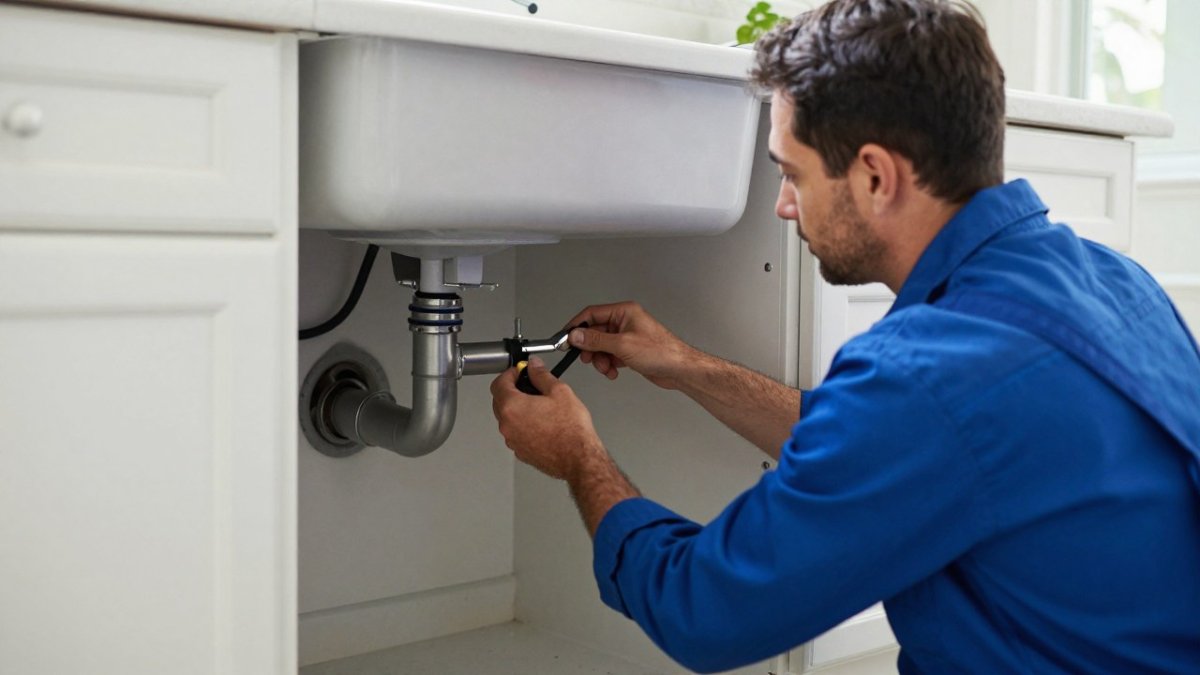
Several things typically move the number up or down:
- Distance from the current drain and supply lines
- Whether the new wall is an exterior wall, interior wall or a wall that backs onto a crawlspace or slab
- Cabinet, countertop and flooring work that has to be removed and replaced
- Electrical work needed for a garbage disposal or dishwasher connection
- Permit and inspection requirements for the project
Drain Routing and Required Slope
The drain is the part that most often limits a sink move. Before opening walls along a new drain route, you can check for hidden wall leaks step by step. Wastewater has to flow downhill, so the new drain needs a consistent slope toward the main line. If the route cannot maintain that slope, the plumber may need to reroute extensively or reconsider the layout.
Routing also affects the vent. A properly vented drain keeps the water moving and prevents gurgling and slow drainage. Your plumber will confirm the vent connection before any walls are closed up. For a full breakdown of how rough-in dimensions and supply and vent lines are set before drywall, see Plumbing Rough-In for Kitchen Remodel.
Water Supply Lines and Vent Placement
Hot and cold supply lines are usually easier to extend than drains, since they run under pressure and do not depend on slope. Still, every new supply run needs fittings, shutoff valves and pressure testing before the wall is finished.
Vent placement is the piece homeowners tend to overlook. A vent that is too far from the drain, or that ends in the wrong place, can cause the sink to drain poorly. Ask your plumber how the vent will connect to the existing system before you agree to the project.
Can You Move a Sink Without Moving the Plumbing?
Sometimes, yes, but only within a small range. If the new sink location stays close to the existing drain and supply lines, a plumber may be able to make short extensions without rebuilding the whole run. This kind of job is usually the least expensive way to change the sink position.
Keeping the plumbing in place limits your options, though. You may be able to shift the sink a short distance along the same wall, or swap in a different sink style that fits the current drain location. If your goal is a major change in layout, you will almost certainly need new plumbing.
A quick check helps here. Ask whether the new location lines up with the existing drain within a few feet and whether the cabinet layout still works. If both answers are yes, you may be able to avoid major plumbing changes.
Keep-Versus-Move Comparison: Pros and Cons
Choosing between keeping the sink where it is and moving it comes down to how much the layout problem costs you each day versus what the move actually costs to build. The table below separates the decision into the factors that matter most.
| Factor | Keep Current Location | Move the Sink |
|---|---|---|
| Plumbing labor | Minimal or none | Higher; scales with distance and access |
| Drain and supply materials | None | New pipe, fittings, shutoff valves |
| Vent work | None | May need rerouting or a new connection |
| Slab or floor access | None | Concrete cutting and patching if on a slab |
| Cabinet and countertop work | None | Removal and replacement at the new spot |
| Flooring repair | None | Patch or replace flooring at old and new locations |
| Permit and inspection | Usually not required for a like-for-like swap | Often required when drain, supply or vent lines change |
| Disruption | Minimal | Days to weeks depending on scope |
| Layout improvement | None | Can fix workflow, traffic and window conflicts |
| Resale appeal | Unchanged | Can help if the layout was a known drawback |
A practical way to decide is to score the move on three questions:
- Does the current sink cost you time every day? If you cross the kitchen repeatedly to reach the sink while cooking, or the sink blocks a traffic path, the layout problem is real and recurring.
- Are you already opening walls, replacing cabinets, or changing flooring? If yes, the incremental cost of relocating the sink is usually lower than a stand-alone move, because the restoration work is already in the budget.
- Does the new location work with the appliances and cabinets you plan to keep? A move that forces a second round of cabinet or countertop changes can erase the layout benefit.
If you answer yes to at least two of those, the move is usually worth pricing out.
Watch out: A low plumbing quote that excludes cabinet repair, countertop replacement, flooring patching, or permit fees is not the real cost of the move. Ask every plumber to list what is included and what is excluded before you compare estimates.
Keep in mind that a sink move is often cheaper when done alongside other work. Coordinating the timing and layout of kitchen remodel plumbing with cabinet and flooring work can help keep the added cost of moving a sink in perspective.
Kitchen Remodel Plumbing Permit Requirements in Sebastian, FL
Moving a kitchen sink usually involves changes to drain, supply and vent lines, and those changes often require a permit and inspection. Requirements can vary by project scope, so confirm with the local building department before work begins.
Skipping a permit can cause problems later, especially when you sell the home or file an insurance claim related to water damage. Ask your plumber to explain exactly which permits apply to your project before the work starts.
Booking a Plumber Assessment Before You Commit
The most useful step before committing to a sink move is an on-site assessment. A plumber can check the existing drain and supply lines, identify the vent path, and tell you whether the new location is practical. You will leave with a clearer picture of what the project involves.
IRC Plumbing has more than 21 years of experience and is licensed and insured (License #CFCA20364). You can also learn how to find a trusted plumber near you before booking. Reach out to request an assessment of your kitchen and an estimate. To get started, reach out to schedule an assessment with IRC Plumbing and get a clear answer on whether moving your sink makes sense for your home.
Frequently Asked Questions
How hard is it to move sink plumbing?
Moving sink plumbing is mostly a matter of access and routing. The drain needs a consistent downward slope and a properly placed vent, while the hot and cold supply lines must reach the new fixture location. If the new position sits over an interior wall or a concrete slab, the work usually takes longer and costs more. A licensed plumber can assess the existing layout and tell you whether the drain can run to the new location without major demolition.
Does moving a kitchen sink require a permit in Sebastian, Florida?
Relocating a kitchen sink usually involves changes to drain, supply and vent lines, and those changes typically need a plumbing permit. Requirements are set by the local building department, so confirm with the City of Sebastian before starting. Ask a licensed plumber which documentation is required before starting. Skipping a required permit can cause problems when you sell the home or file an insurance claim.
What should you consider before moving a kitchen sink?
Start with the distance and direction of the move, because longer runs need more pipe and more labor. Check whether the new location sits over a slab, a crawlspace or a finished wall, since each changes access. Consider the cabinetry, countertop and flooring you will need to restore, and whether electrical work for a disposal or dishwasher is involved. Ask for an itemized estimate that separates plumbing labor, materials and restoration so you can compare it fairly against the value of the new layout.
Can you move a kitchen sink without moving the plumbing?
Sometimes, but only for short distances. If the new sink position is close to the existing drain and supply lines, a plumber may be able to make small adjustments without rerouting much pipe. Moving the sink far from its original position almost always requires new drain and supply runs. A plumber can tell you quickly whether the existing plumbing can be reused, which is the fastest way to estimate whether the move is worth pursuing.