Last Updated: November 17, 2026
Quick Summary
Water heater installation usually takes a few hours for a standard tank replacement, often two to four hours of work. Electric units tend to be quicker, while gas units commonly take three to five hours because of the gas line and venting.
- Draining a standard 40- to 50-gallon tank commonly takes 20 to 40 minutes.
- Electric replacements of a like-for-like unit commonly run about two to three hours of hands-on work.
- Gas replacements often take three to five hours due to the gas line, venting and combustion air checks.
- Older plumbing, electrical or venting can add time, so ask about existing conditions during the estimate.
- Give a new tank a few hours to reach full temperature before running heavy loads.
Table of Contents
- How Long Water Heater Installation Takes
- How Long It Takes to Remove and Replace a Hot Water Heater
- Step-by-Step Installation Timeline
- How Long It Takes to Replace an Electric Water Heater
- How Long It Takes to Replace a Gas Water Heater
- What Makes Installation Take Longer in Sebastian
- How Long to Wait After Installing a Hot Water Heater
- Booking Your Water Heater Installation with IRC Plumbing
- Frequently Asked Questions
How Long Water Heater Installation Takes
For most homes, a standard water heater replacement takes a few hours from start to finish.
The short answer is that the swap itself is usually the quick part. Shutting off utilities, draining the old tank, and testing the new unit take up most of the time.
Below, we walk through each stage of a typical installation, how electric and gas units differ, and what can make a job run longer.
How Long It Takes to Remove and Replace a Hot Water Heater
Removing and replacing a hot water heater is often a job that can be finished in one visit. Standard tank swaps can take roughly two to four hours.
Removal time depends on how the old unit was set up. A tank that sits in an open closet with clear access moves out quickly.
Watch out: if the old tank has been sitting for years, the drain valve may be stuck or clogged with sediment. Forcing it can crack the valve, so a plumber will often take extra time to clear it first.
Step-by-Step Installation Timeline
A full installation follows a fairly predictable order. Here is how a typical job breaks down.
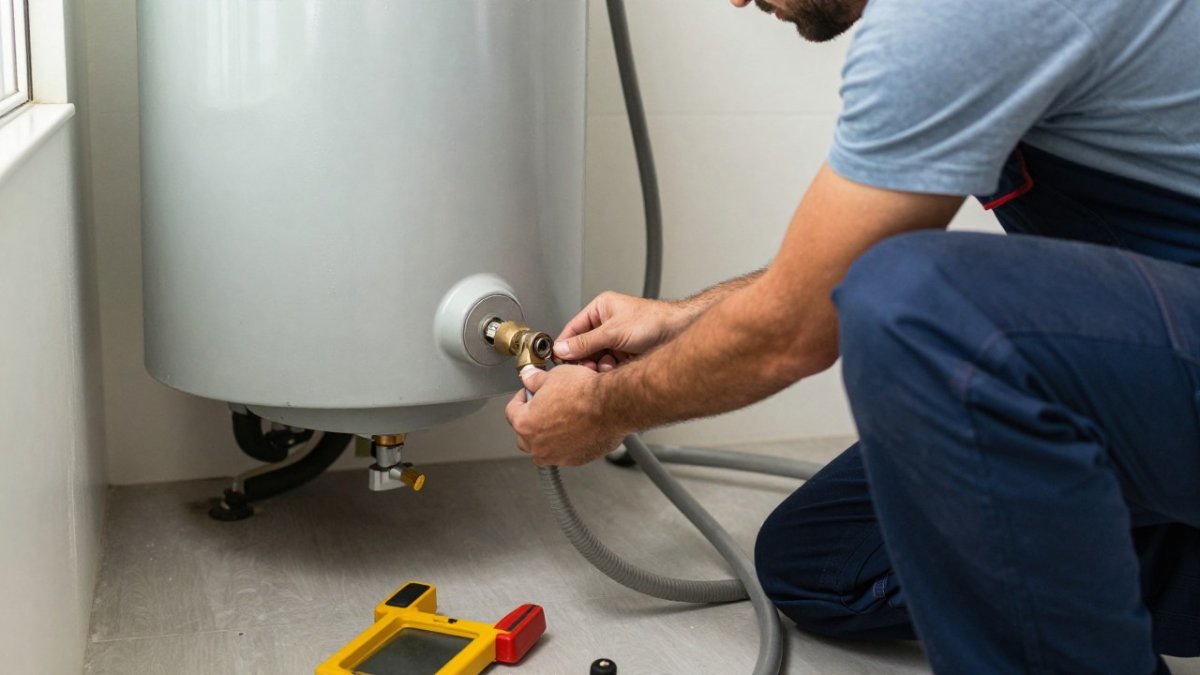
Arrival, preparation and shutting off the water and power
The first stage is setup. The plumber confirms the new unit matches your home’s fuel type, capacity and location before shutting off the water supply and the power or gas to the old heater.
- Confirm the replacement unit and connections
- Shut off the cold water supply valve
- Turn off power at the breaker or the gas valve
- Clear a path to the work area
This stage usually takes 20 to 45 minutes.
Draining and removing the old unit
Next, the plumber attaches a hose to the drain valve and runs it to a floor drain or outside. Draining a standard 40- to 50-gallon tank commonly takes 20 to 40 minutes. Once empty, the old unit is disconnected and carried out, which can take another 30 to 60 minutes depending on size and access.
Positioning, connecting and testing the new unit
The new tank is set in place, leveled, and connected to the water lines, and for gas units, the gas line and venting. Electric units need their wiring connected at the panel. After the connections are made, the tank fills and the plumber checks every joint for leaks before turning the power or gas back on.
This final stage often takes one to two hours, including testing and a check of the temperature setting.
The table below sums up the approximate time each stage of a typical installation takes.
| Stage | What happens | Typical time |
|---|---|---|
| Arrival and shutoff | Confirm unit, shut off water and power or gas | 20 to 45 minutes |
| Draining | Drain a 40- to 50-gallon tank | 20 to 40 minutes |
| Removal | Disconnect and carry out old unit | 30 to 60 minutes |
| Set and connect | Position, level and connect new unit | 45 minutes to 1.5 hours |
| Fill and test | Fill tank, check for leaks, restore power | 30 to 60 minutes |
How Long It Takes to Replace an Electric Water Heater
Electric water heater replacements are usually the quicker of the two common fuel types because there is no gas line and no venting to reconfigure. A like-for-like swap of a standard tank in good condition commonly runs about two to three hours of hands-on work. The range widens once the electrical side needs attention.
Where the time goes on an electric job
A typical electric replacement breaks down roughly like this:
- Shutoff and setup: 20 to 45 minutes to confirm the unit, kill power at the breaker, and close the cold water supply.
- Drain and removal: 20 to 40 minutes to drain a 40- to 50-gallon tank, plus 30 to 60 minutes to disconnect and carry it out.
- Set and connect: 45 minutes to 1.5 hours to position, level, connect the water lines, and wire the unit at the panel.
- Fill, test, and energize: 30 to 60 minutes to fill the tank, check every joint for leaks, restore power, and confirm the temperature setting.
Three complexity tiers
Like-for-like replacement. Same size, same location, existing wiring in good shape. This is the two-to-three-hour case.
Same location, electrical upgrade needed. If the panel lacks a dedicated circuit or the existing wiring is undersized or corroded, an electrician or the plumber may need to run a new circuit or change a breaker.
Relocation or conversion. Moving the unit to a new spot, or converting from gas to electric, adds the most time.
Electrical specifics that affect timing
- Breaker and circuit size. The new unit must match the circuit. A mismatch means a panel change before the unit can be energized.
- Disconnect and whip. Some installations need a proper disconnect within sight of the unit; if it is missing, that is added work.
- Grounding and bonding. Older homes may need the bonding brought up to current code.
What to have ready
Clear the path to the heater, make sure the breaker panel is accessible, and confirm the model and gallon size you want. If you are unsure whether your panel can support the new unit, ask the installer to check during the estimate so the electrical work is priced and scheduled up front rather than discovered mid-job.
How Long It Takes to Replace a Gas Water Heater
Gas water heater replacements generally take longer, often three to five hours. The added time comes from the gas line connection, the venting system, and the combustion air requirements.
Here is what usually adds time on a gas job:
- Reconnecting or upgrading the gas line
- Replacing a corroded or undersized vent pipe
- Checking for gas leaks at every joint
- Confirming the unit’s combustion air supply
Because gas work carries real risk, a licensed plumber should test every connection before the heater is lit. Do not skip that check to save time.
What Makes Installation Take Longer in Sebastian
Most national guides give you a single time range and stop there. In Sebastian and the rest of Indian River County, the calendar time a job takes can differ from the hands-on time, and the reasons are local. Here is what actually stretches a water heater installation in this area, and how to plan around it.
Permits and inspection scheduling
Confirm current rules with the City of Sebastian building department or Indian River County before you schedule, since requirements and fees can change.
Older housing stock and existing plumbing condition
- Galvanized or corroded supply lines that need to be cut back and adapted before the new unit can be connected.
- Non-standard venting on older gas units that no longer meets current code and has to be reconfigured.
- Outdated electrical at the panel, which can mean a dedicated circuit or a breaker change before an electric unit is energized.
- Sediment-heavy tanks where the drain valve clogs and draining takes longer than the usual 20 to 40 minutes.
Site access and unit location
Where the heater sits changes the labor. A garage or utility closet with a clear path is the fast case. An attic, a second-floor closet, or a tight space behind finished walls adds time to move the old tank out and the new one in, and may require a second person. Narrow doorways and stair turns are the usual culprits.
Heat and humidity
Florida’s climate does not freeze pipes, but it does affect the work. Sealants and thread compounds need proper curing, and a crew working in an uncooled garage or attic in summer moves more slowly and takes more breaks. This is a modest factor, usually minutes rather than hours, but it is real.
Code updates that surface mid-job
Local code can differ from how the old unit was installed. A missing expansion tank, an absent drain pan, or a vent that no longer meets clearance requirements can turn a like-for-like swap into a small upgrade. A good installer flags these during the estimate rather than after the old unit is out.
What to ask before you book
To get a realistic timeline for your specific home, ask:
- Is the permit included, and when will it be filed?
- Is the inspection scheduled as part of the job or separately?
- What did you see in the existing plumbing, venting, and electrical that could add time?
- How long will the crew be on site, and when will hot water be back?
How Long to Wait After Installing a Hot Water Heater
Once the new unit is installed and tested, you can use it right away, but hot water takes time to reach full temperature.
Give the tank a few hours before running heavy loads, such as back-to-back showers or the dishwasher and washer at once. This lets the water reach its set temperature and helps you check that everything is working as expected.
Ask your installer about the first-use checklist. A good plumber will walk you through the temperature setting, the shutoff valve, and what a normal sound and performance look like.
Booking Your Water Heater Installation with IRC Plumbing
If your water heater is nearing the end of its life or has started leaking, scheduling a replacement sooner rather than later can save you from a cold-shower emergency. IRC Plumbing is a family-owned, licensed and insured plumbing business serving the Treasure Coast with over 21 years of experience.
To get started, visit our site to see the water heater replacement cost estimates and check what a typical job involves. You can also learn what causes leaks before deciding whether replacement makes sense. When you are ready, you can browse our water heater services or find heater services in Indian River County. Sebastian homeowners looking for a local crew can also contact our plumber in Sebastian to book an appointment.
Frequently Asked Questions
How long does it take for a plumber to install a hot water heater?
A standard like-for-like replacement usually takes a few hours once the plumber is on site, including draining the old unit, setting the new one and testing it. Total time depends on the unit type, the fuel source, how easily the old tank comes out and whether any plumbing, electrical or venting changes are needed. Your installer can give you a time estimate after looking at the setup. IRC Plumbing can give you a schedule when you call or request service through our website.
How long does it take to replace an electric water heater?
Replacing an electric water heater is often one of the simpler jobs because it needs no gas line or venting work. The main time is spent draining and removing the old tank, positioning the new one and making the water and electrical connections. Electrical work and any needed panel or wiring updates can add time. Ask your installer to walk you through the expected schedule before the work starts.
How long does it take to replace a gas water heater?
A gas water heater replacement generally takes longer than an electric one because the gas line connection, venting and combustion air requirements must be checked and connected correctly. Leak testing of the gas connection is part of the job. Venting changes or a relocated unit can extend the timeline. Your installer can confirm the scope of work after inspecting the existing setup.
How long after installing a hot water heater do you have to wait?
Most new water heaters can be used soon after installation once the tank has filled with water and the connections have been tested for leaks. The tank needs time to heat, so hot water may not be at full temperature right away. Your installer should confirm when the system is ready and explain any startup steps. If you notice leaks, unusual noises or no hot water after the recovery period, contact your plumber.