Table of Contents
- How to Tell if Your Toilet Is Running Constantly
- Signs of a Leaking Toilet You Shouldn’t Ignore
- Common Causes of a Toilet Running Constantly
- How to Adjust Toilet Float and Water Level
- Toilet Flapper Replacement Cost and When to Replace
- DIY Troubleshooting Steps to Stop a Running Toilet
- When to Call a Professional Plumber
- Frequently Asked Questions
Last Updated: September 18, 2026
How to Tell if Your Toilet Is Running Constantly
A constantly running toilet is easy to confirm: lift the tank lid and listen. If you hear water moving when no one has flushed, the tank is refilling when it shouldn’t be. That’s the classic sign of a toilet running nonstop, and it usually points to a worn flapper valve or a misadjusted float.
A running toilet wastes water every second it runs. The fix is almost always a cheap rubber part, not a new toilet.
Signs of a Leaking Toilet You Shouldn’t Ignore
Signs of a leaking toilet go beyond the constant sound of water. A few quiet clues show up first, and catching them early saves money.
Watch for these:
- A faint hissing sound between flushes
- Phantom flushing, where the toilet refills on its own
- Water pooling at the base of the bowl
- A water bill that climbs with no change in use
- The bowl refilling long after you flush
Common Causes of a Toilet Running Constantly
Most causes of a toilet running constantly come down to one of three parts inside the tank: the flapper valve, the fill valve assembly, or the lift chain. Each one fails in its own way, and each has a distinct symptom.
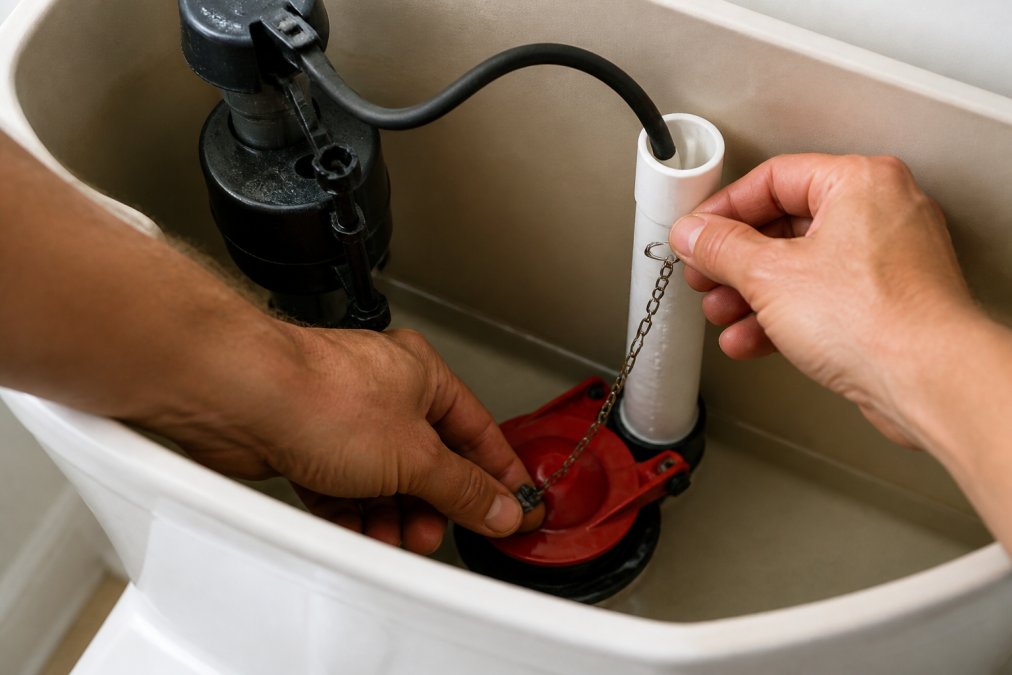
Let’s break down each one.
Flapper Valve and Seal Issues
The flapper is the rubber flap at the bottom of the tank. It lifts when you flush and drops back to seal the tank. When it wears out, it stops sealing. Water leaks into the bowl, the tank refills, and the cycle repeats.
Fill Valve Assembly Problems
The fill valve refills the tank after a flush. When it fails, it may not shut off at the right water level. The tank overfills and water spills into the overflow tube.
Chain Length and Tension Issues
The lift chain connects the flush handle to the flapper. If it’s too long, it can get caught under the flapper and hold it open. If it’s too short, the flapper won’t seal at all.
How to Adjust Toilet Float and Water Level
Learning how to adjust toilet float height is the fastest way to fix an overfilling tank. The float controls when the fill valve shuts off. Set it too high and water spills into the overflow tube. Set it too low and the flush is weak.
There are two float types, and each adjusts differently.
Adjusting a Float Ball
The float ball is the round, balloon-shaped float on an arm. To adjust it:
- Turn off the water supply at the shut-off valve.
- Flush to empty the tank.
- Find the screw on top of the fill valve.
- Turn the screw clockwise to lower the water level.
- Turn it counterclockwise to raise it.
- Turn the water back on and flush to test.
Adjusting a Float Cup
A float cup slides up and down on the fill valve body. To adjust it:
- Turn off the water and flush.
- Pinch the clip on the cup.
- Slide the cup down to lower the level.
- Slide it up to raise the level.
- Release the clip to lock it in place.
- Turn the water on and test.
Toilet Flapper Replacement Cost and When to Replace
| Approach | Typical Cost Range | Time |
|---|---|---|
| DIY, standard flapper | Cost of the part only | 15-30 minutes |
| DIY, flapper + valve seat kit | Cost of parts only | 30-45 minutes |
| Pro service call, flapper only | Parts plus a minimum service charge | Under an hour on site |
| Pro service call, flapper + fill valve | Parts plus labor | 1-2 hours on site |
A few things drive the price up or down:
- Flapper type. A universal rubber flapper is a common option. A model-specific flapper for a one-piece or low-profile toilet may be proprietary.
- Whether the valve seat needs work. If the seat is rough, you may need a repair kit rather than just a flapper, which adds to the parts cost.
- Whether you bundle the repair. Replacing the flapper and fill valve at the same time can be an efficient approach, since the tank is already open.
Replace the flapper when you see these signs:
- The rubber is stiff, cracked, or warped
- The surface feels slimy or coated
- The toilet runs even after you adjust the chain
- The flapper is more than five years old
- The bowl refills on its own between flushes
Never force a stiff flapper to seal by pressing it down. This can crack the valve seat and turn a cheap fix into a bigger repair.
If you’re not comfortable working inside the tank, or if the toilet is a one-piece or dual-flush model with a proprietary flapper, a licensed plumber can confirm the right part before you buy the wrong one.
DIY Troubleshooting Steps to Stop a Running Toilet
Use this flow to find the fault fast. Work through it in order, and stop when the running stops.
| Step | What to Check | If It Fails | Fix |
|---|---|---|---|
| 1 | Flush handle and lift chain | Chain too long or tangled | Adjust chain to half-inch slack |
| 2 | Flapper valve seal | Flapper stiff or warped | Replace flapper |
| 3 | Water level vs overflow tube | Level too high | Adjust float down |
| 4 | Fill valve shutoff | Valve won’t stop | Replace fill valve |
| 5 | Valve seat surface | Rough or coated | Clean or replace seat |
Here’s the flow in plain steps:
- Turn off the water supply at the shut-off valve.
- Flush the toilet to drain the tank.
- Inspect the lift chain for tangles or too much slack.
- Lift the flapper and check the rubber for cracks or stiffness.
- Run your finger along the valve seat. Feel for grit or rough spots.
- Check that the water level sits one inch below the overflow tube.
- Adjust the float if the level is wrong.
- Turn the water back on and watch a full flush cycle.
Drop a few drops of food coloring into the tank and wait 15 minutes without flushing. If color shows up in the bowl, the flapper is leaking. This is the fastest way to confirm an internal leak.
When to Call a Professional Plumber
Some running toilets need more than a DIY fix. Call a pro when:
- You’ve replaced the flapper and fill valve and it still runs
- The tank or bowl is cracked
- The shut-off valve won’t close or is stuck
- Water pools at the base of the toilet
- The flush valve body itself is damaged, not just the flapper
- You have a dual-flush system with a complicated valve
Dual-Flush Toilets: Why They’re Different
Most running-toilet guides assume a standard gravity toilet with a single flapper. Dual-flush toilets, the ones with two buttons on top of the tank, use a different mechanism, and the standard fixes often don’t apply.
Here’s what changes:
- Two flush volumes, two seals. A dual-flush toilet typically uses a split flapper or a drop valve with two stages. One stage releases a partial flush, the other a full flush. If either stage fails to seal, the toilet runs constantly.
- The button assembly replaces the handle and chain. There’s no lift chain to adjust. The buttons actuate a cable or rod that lifts the seal. A stretched cable or a misaligned button can hold the seal open.
- The seal may be a drop valve, not a flapper. Some dual-flush models use a canister-style drop valve that seats vertically. These can develop mineral buildup on the gasket, which prevents a full seal.
- Replacement parts are often model-specific. A universal flapper won’t fit most dual-flush toilets. You usually need the manufacturer’s part number, which means identifying the model first.
- Press each button separately and listen for the seal to drop cleanly.
- Lift the tank lid and watch the drop valve or split flapper as it closes.
- Look for mineral crust or debris on the gasket surface.
- Check that the button cable or rod isn’t binding or stretched.
- Confirm the water level sits at the manufacturer’s marked line, not one inch below the overflow tube as on a standard toilet.
Other Reasons to Bring in Help
Beyond dual-flush systems, call a pro if:
- The shut-off valve won’t close, so you can’t isolate the water
- The toilet is a one-piece model where the tank and bowl are integrated
- You’ve already replaced two parts and the running continues
- The water bill has climbed sharply and you suspect more than one leak
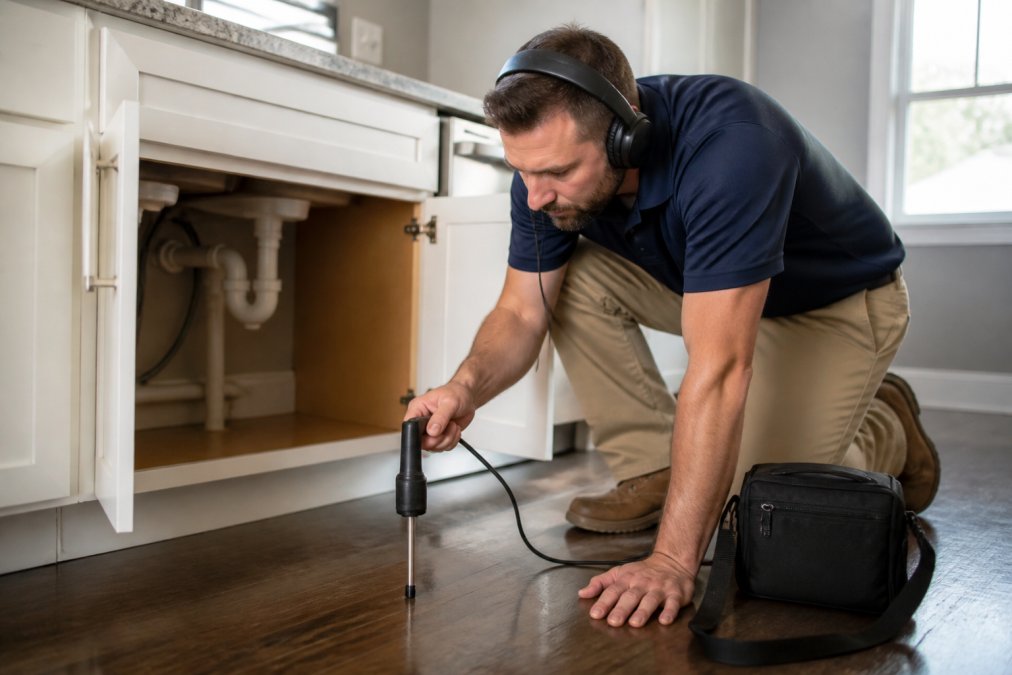
A licensed plumber can diagnose the fault before touching a part. If your water bill has been climbing, a running toilet may not be the only leak, a leak detection service can find hidden problems before they cause real damage.
Frequently Asked Questions
What is the most common cause of a toilet running constantly?
The flapper valve is usually the culprit. Over time, the rubber flapper warps, cracks, or gets coated with sediment, so it no longer seals tightly against the flush valve seat. Water then leaks from the tank into the bowl, and the fill valve keeps refilling the tank to maintain the water level. A quick test: add a few drops of food coloring to the tank, wait 15 minutes without flushing, and check if the bowl water changes color. If it does, the flapper needs replacement. This simple fix often solves the problem permanently.
Can a running toilet increase my water bill?
Yes, a constantly running toilet can waste hundreds of gallons per day, significantly raising your water bill. The exact amount depends on the severity of the leak and your local water rates. Even a slow, silent leak can add up. Fixing the issue promptly stops the waste and lowers your monthly bill. If you suspect a hidden leak, a professional can perform a leak detection inspection to confirm.
How do I know if my toilet flapper is bad?
Common signs of a bad flapper include a toilet that runs intermittently, phantom flushing (the toilet refills without being used), and a hissing or trickling sound from the tank. You can also perform a dye test: put food coloring in the tank, wait 15 minutes, and see if the color appears in the bowl without flushing. If it does, the flapper is leaking. Another sign is a flapper that feels stiff, cracked, or covered in slime. Replacing a flapper is a straightforward DIY task that usually takes under 30 minutes.
Why is my toilet running but not leaking?
A toilet can run without visible water on the floor because the leak is internal, from the tank to the bowl. This is often caused by a faulty flapper, a misadjusted float, or a fill valve that doesn’t shut off completely. The water level may be set too high, causing water to spill into the overflow tube. Or the refill tube might be inserted too far into the overflow tube, siphoning water continuously. These issues waste water silently. Checking and adjusting the water level and replacing worn parts usually resolves the problem.