Last Updated: November 22, 2026
Quick Summary
Choose bathroom fixtures for a coastal Florida home by weighing the room’s conditions before the style. Salt air and humidity dull finishes and pit hardware, so pick corrosion-resistant materials and finishes rated for moisture, then match each finish to how often you are willing to wipe it down.
- Ask the manufacturer for the finish warranty in writing before buying.
- Solid brass generally outlasts plated zinc as a fixture base metal.
- Chrome and polished nickel need frequent drying because water spots show quickly.
- Brushed nickel hides spots and fingerprints far better than chrome does.
- Use mild soap and soft cloths, never abrasive pads or harsh chemical cleaners.
Table of Contents
- Why Salt Air and Humidity Change Fixture Choices in Sebastian
- Corrosion-Resistant Bathroom Fixtures: Which Materials Hold Up Best
- Brushed Nickel vs. Chrome Bathroom Fixtures for Coastal Conditions
- Bathroom Faucet Finishes and How Each Ages Near the Coast
- Choosing Showerheads, Vanities and Hardware to Match Your Coastal Palette
- Plumbing Permit Requirements When Replacing Bathroom Fixtures
- Scheduling Your Bathroom Fixture Replacement With IRC Plumbing
- Frequently Asked Questions
Why Salt Air and Humidity Change Fixture Choices in Sebastian
Bathroom fixtures in a coastal home work harder than the same fixtures inland. Salt-laden air settles on every surface, and humidity keeps moisture sitting on metal long after a shower ends. Over time, that combination dulls finishes, pits hardware and loosens the look of a bathroom that once looked new.
At IRC Plumbing, we start every fixture conversation with the environment, not the style catalog. A faucet that looks perfect in a showroom can show spotting within a season if it was never made for salt exposure. Choosing well here means thinking about the room’s conditions first and the color second.
Corrosion-Resistant Bathroom Fixtures: Which Materials Hold Up Best
Fixture bodies are commonly made of brass, stainless steel, or zinc alloy with a plated or PVD finish on top. The base metal and the finish both matter.
Look for finishes rated for high-moisture or coastal use, and ask the manufacturer for the finish warranty in writing. Fixtures sold for outdoor or marine settings are usually built for heavier exposure than standard interior lines.
Watch out: Abrasive cleaners and harsh chemical scrubbers can strip protective finishes faster than salt air does. A mild soap and a soft cloth are usually enough.
Brushed Nickel vs. Chrome Bathroom Fixtures for Coastal Conditions
Chrome is the most common bathroom finish and handles moisture well when it is a quality plating. Its weakness is that every water spot and fingerprint shows, which can make a coastal home feel like it needs constant wiping.
Brushed nickel hides spots and fingerprints far better and suits the soft, sandy palettes common along the Treasure Coast. It is not immune to corrosion, though.
Bathroom Faucet Finishes and How Each Ages Near the Coast
Finish is a coating, not a metal. What ages in a Sebastian bathroom is the bond between that coating and the brass, stainless steel, or zinc alloy underneath, and salt-laden humidity is what attacks the edges of that bond first. Two faucets with the same finish name can age very differently depending on how the finish was applied and how thick it is. Here is how the common finishes actually behave near the coast, and what each one asks of you in upkeep.
Polished chrome. Chrome is a plated finish over brass or zinc, and quality plating handles humidity well. Its practical weakness is visual: water spots, soap film, and fingerprints show on a mirror-bright surface within a day in a humid bathroom. Care is simple, a soft cloth and mild soap, dried after each use, but the wiping frequency is higher than any other finish. Look for a finish warranty stated in writing; a thin decorative chrome over a zinc body is the version that pits at the drain and spout edges.
Brushed nickel. The brushed texture scatters light, so mineral marks and fingerprints are far less visible than on chrome, which is why it suits sandy and sea-glass palettes along the Treasure Coast. The trade-off is wear at high-touch points: hands gripping the handle and the spout tip can polish the brushed grain smooth over years, and on lower-grade product the finish can wear through to the base metal. PVD (physical vapor deposition) finishes hold up better than conventional plated nickel. Clean with mild soap only; abrasive pads will flatten the grain and create shiny patches.
Oil-rubbed bronze. This is a living finish, a dark coating over a brass or copper-toned base that is designed to wear and reveal warmer tones at the edges. Many coastal homeowners like the patina; the risk is uneven wear if the coating is thin, which reads as blotchy rather than aged. It needs the gentlest care of the group: no abrasive cleaners, no vinegar or acidic sprays, and no scouring pads, all of which strip the dark layer faster than humidity does.
Matte black. Matte black is typically a powder coat or PVD layer over brass or zinc. It makes a strong statement against white and sandy tile, but scratches show as light lines because the coating is opaque, and lower-quality coatings can chalk or fade under sustained humidity and cleaning. Care means mild soap, a soft cloth, and avoiding abrasive cleaners that dull the matte surface.
Polished nickel and unlacquered brass. Polished nickel is a plated finish that resists corrosion well and shows fewer spots than chrome; unlacquered brass develops a patina that some homeowners want and others do not. Both reward mild soap and soft cloths and punish abrasive cleaners.
A practical way to compare before you buy: ask the manufacturer for the finish warranty in writing, confirm the base metal (solid brass generally outlasts plated zinc), and check whether the finish is PVD or conventional plating. Then match the finish to your tolerance for wiping. Chrome and polished nickel ask for frequent drying; brushed nickel, oil-rubbed bronze, and matte black hide everyday marks but demand gentler cleaners. Whichever you choose, skip abrasive scrubbers and harsh chemical cleaners, they strip protective finishes faster than salt air does.
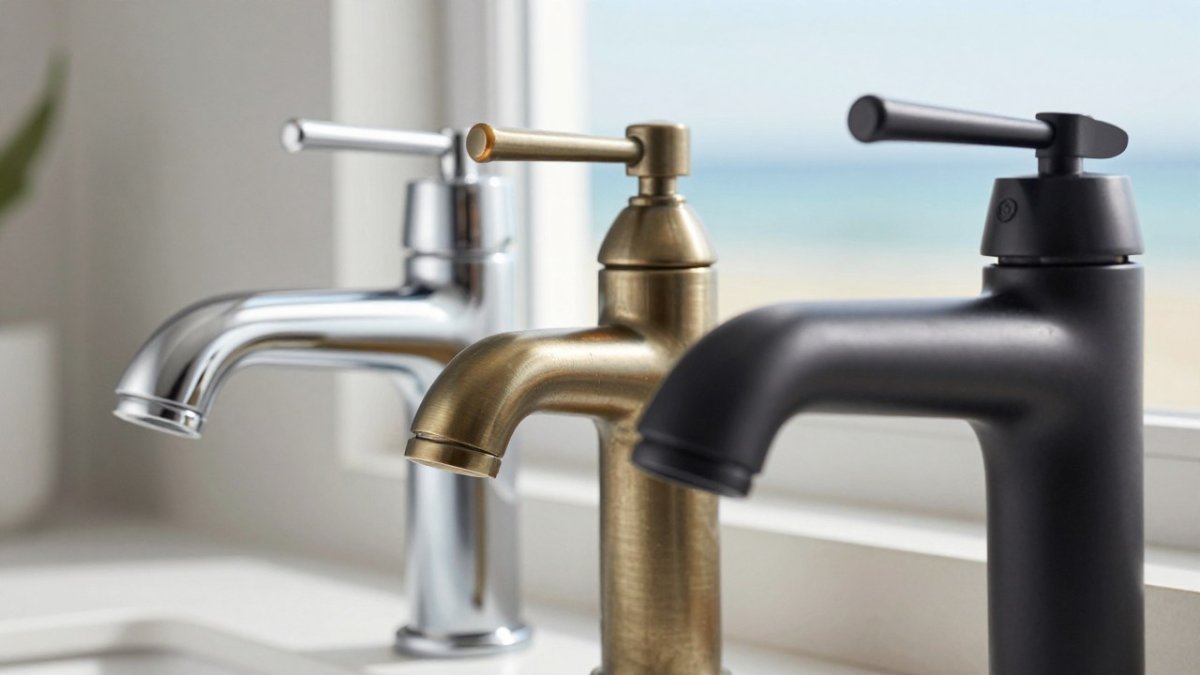
Each common finish behaves differently in salty, humid bathrooms, and the care it needs varies too.
| Finish | Main weakness | Care |
|---|---|---|
| Polished chrome | Water spots and fingerprints show quickly | Soft cloth, mild soap, dry after each use |
| Brushed nickel | Wear at high-touch points over time | Mild soap only, no abrasive pads |
| Oil-rubbed bronze | Uneven wear if coating is thin | No abrasives, vinegar or acidic sprays |
| Matte black | Scratches show as light lines | Mild soap, soft cloth, avoid abrasives |
| Polished nickel and unlacquered brass | Unlacquered brass develops patina | Mild soap and soft cloths |
Choosing Showerheads, Vanities and Hardware to Match Your Coastal Palette
Coastal bathrooms often lean on whites, sandy beige, ocean blue, sea-glass tones, and natural wood, and keeping fixtures in one finish family makes the room read as a single design rather than a mix of competing metals. But the palette is the easy part. The fixtures themselves have to fit the room, the existing plumbing, and each other, and that is where most coastal bathroom projects lose time and money. Treat the selection as one checklist rather than a series of separate purchases.
Showerheads and valves. Showerheads are sold by flow rate in gallons per minute (gpm), and lower flow saves water but can feel weak if the shower arm and valve are not matched to it. Confirm the shower arm length and the valve trim’s compatibility with the rough-in valve already in the wall, mixing brands between trim and valve is a common and expensive mistake. Rain heads and handhelds on a diverter need the diverter to match the valve brand.
Toilets. Measure the rough-in distance from the finished back wall to the center of the floor drain. Confirm the bowl shape (elongated versus round) fits the room, and check the flush type and water use. Verify the seat and supply line are included or budgeted separately.
Drains and trim. Shower drains come in different sizes and connection types, and the drain finish should match the shower trim. A linear drain changes the slope requirements of the shower floor, so it is not a like-for-like swap for a center drain.
Vanities. Measure the available wall space and door swing before choosing a width. Vanities with moisture-resistant panels or sealed wood, paired with a nonporous quartz or sealed porcelain top, make cleaning simpler and reduce the damage salt-laden moisture can cause. Confirm the vanity’s plumbing cutout lines up with the existing supply and drain locations, or plan for a plumber to move them.
Hardware and accessories. Solid metal towel bars, robe hooks, and cabinet pulls hold up far better than hollow alloy in a humid room. Match the finish family to the faucets, and confirm the mounting hardware suits the wall, tile and drywall need different anchors.
Light and airy finishes help a small bathroom feel larger, but test samples in your own bathroom’s light before committing. Before you order, put every fixture on one list with its dimensions, hole configuration, flow rate or flush volume, and finish, then check each line against the room and the existing plumbing. That single step catches most of the compatibility problems that otherwise surface on installation day. With dimensions, connections, and finishes confirmed in advance, bathroom fixture installation services can be considered with a clearer sense of what the work will involve.
Plumbing Permit Requirements When Replacing Bathroom Fixtures
Requirements for permits vary by municipality and by project scope, so check with the local building department before starting any work that changes the plumbing layout.
Scheduling Your Bathroom Fixture Replacement With IRC Plumbing
Plan the fixture order before scheduling the installation. Confirm the rough-in dimensions and valve types against the fixtures you choose.
Once your fixtures are selected, schedule the installation with a licensed plumber who can check the existing supply lines and valves. IRC Plumbing, a family-owned business with over 21 years of experience, is licensed and insured under License #CFCA20364 and serves the Treasure Coast. To schedule a fixture replacement or request a quote for your project, call IRC Plumbing.
Frequently Asked Questions
What bathroom fixture finishes work best in a coastal Florida home?
Fixture finishes vary in how they handle salt air and humidity, so compare product specifications before choosing. Before you buy, ask the manufacturer or your supplier about the finish warranty and recommended cleaning products. Rinsing fixtures with fresh water after exposure to salt air and wiping them dry helps any finish last longer.
Are brushed nickel fixtures a good choice for a coastal bathroom?
Brushed nickel is a practical choice for many coastal bathrooms. Results depend on the underlying metal and the quality of the finish, so compare product specifications rather than relying on the finish name alone. Wipe fixtures dry after use and clean them with a mild, non-abrasive cleaner to keep the finish looking consistent over time.
Which bathroom faucet materials resist corrosion near the coast?
When comparing faucets, check whether the product lists its body material and finish type, and ask your plumber which models they have installed in nearby coastal homes. Good cleaning habits and regular inspection of supply lines and connections also help protect the faucet.
What should I ask a plumber before replacing bathroom fixtures in Sebastian, Florida?
Ask whether the replacement requires a permit and who will pull it, since bathroom fixture changes that involve rerouting or new connections often do. Confirm that the plumber is licensed and insured. For current pricing, ask IRC Plumbing directly through its website or by requesting a quote, since costs depend on the fixtures chosen, the work involved and the condition of existing plumbing.