Last Updated: November 12, 2026
Quick Summary
A popping noise from a water heater usually means water is boiling under sediment that has settled at the bottom of the tank. Sediment-related popping is common and typically signals that the tank needs maintenance rather than indicating an emergency. Monitoring for leaks, corrosion, or a dripping relief valve helps determine when professional help is needed.
- Hard water leaves calcium and magnesium deposits that settle on the tank floor.
- Trapped water under the sediment overheats and pops through the layer as steam bubbles.
- Popping or crackling alone, with plenty of hot water and no leaks, is usually routine sediment.
- A dripping or spraying pressure-relief valve means you should stop and call a licensed plumber.
- Electric heaters must have the breaker off, and must be full of water before power is restored.
Table of Contents
- What a Popping Water Heater Is Telling You
- Sediment Buildup: The Most Common Cause of Popping
- Is a Water Heater Popping Sound Dangerous?
- How to Fix Popping Noise in a Water Heater, Step by Step
- Water Heater Popping Sound After Flushing
- Why a Brand New Water Heater Is Making a Popping Noise
- When to Call IRC Plumbing for Water Heater Service in Sebastian
- Frequently Asked Questions
What a Popping Water Heater Is Telling You
A popping sound from a water heater usually means water is boiling under sediment at the bottom of the tank. The noise is common, and in most homes it’s a sign the tank needs maintenance rather than a sign of an emergency.
Water heaters, especially tank-style units, collect minerals over time. When the heater runs, those minerals settle at the bottom.
Gas and electric tank heaters both do this. Tankless units work differently, but they can make their own noises.
Sediment Buildup: The Most Common Cause of Popping
Sediment buildup is the leading explanation for popping noises. If your water is hard, minerals like calcium and magnesium drop out of the water and collect on the tank floor. Over months and years, that layer thickens.
How mineral deposits form in a tank and affect heating
Here’s the process in plain terms:
- Hard water carries dissolved calcium and magnesium.
- Heating the water causes those minerals to come out of solution.
- They settle and form limescale on the tank bottom.
Heavier sediment means louder noise and slower heating. Many homeowners notice longer wait times for hot water before the popping gets obvious.
Popping, banging, and rumbling: how to tell the difference
Not every noise means the same thing. Use these rough guides:
- Popping or crackling: Usually sediment boiling under the layer.
- Rumbling: Often sediment or scale, sometimes a heating element working through buildup.
- Banging or knocking: Can point to pressure changes or water hammer, so have it checked sooner.
If the sound changes quickly or gets much louder, don’t wait. Note when it happens and how long it lasts before calling for help.
Is a Water Heater Popping Sound Dangerous?
A popping sound caused by sediment is usually not dangerous on its own, but it is a signal worth reading carefully. The noise itself won’t hurt you; the conditions that create it can, over time, damage the tank and raise energy use. The practical question is how to tell routine sediment noise from a warning sign that needs prompt attention.
Why sediment noise can escalate
When minerals insulate the tank floor, the water trapped beneath them overheats and turns to steam. That steam expands and pops through the layer, and the cycle repeats every time the burner or element fires. The same insulating layer forces the heater to run longer and hotter to reach the set temperature. Over months, that extra heat stress and the trapped moisture can accelerate corrosion of the tank bottom and shorten the unit’s life.
A symptom-to-action guide
Use this to judge urgency. When in doubt, treat it as urgent.
- Popping or crackling only, hot water still plentiful, no leaks: Likely routine sediment. Schedule a flush; no emergency.
- Popping plus slower hot-water recovery or higher energy bills: Sediment is likely thick. Schedule a professional flush and inspection soon.
- Popping plus a dripping or spraying pressure-relief valve: Stop and call a licensed plumber. Repeated relief-valve discharge can point to excess pressure or a failing valve.
Gas and electric: different hazards
On a gas unit, the burner and flue are the parts to respect. Soot, a lazy yellow flame, or a scorching smell around the burner access panel are reasons to stop using the heater and call a professional. Because sediment can contribute to the popping that signals trouble, understanding what causes it to build up can help explain why the heater needs attention, as QuickHotWater.com notes.
The bottom line
Sediment popping is a maintenance signal, not a panic button. But leaks, relief-valve discharge, corrosion, scorching smells, or loss of hot water move it into professional territory. If you’re unsure which category you’re in, a licensed plumber can test the relief valve, check the anode rod, and inspect the heating element or burner to tell you whether the tank needs service or replacement.
How to Fix Popping Noise in a Water Heater, Step by Step
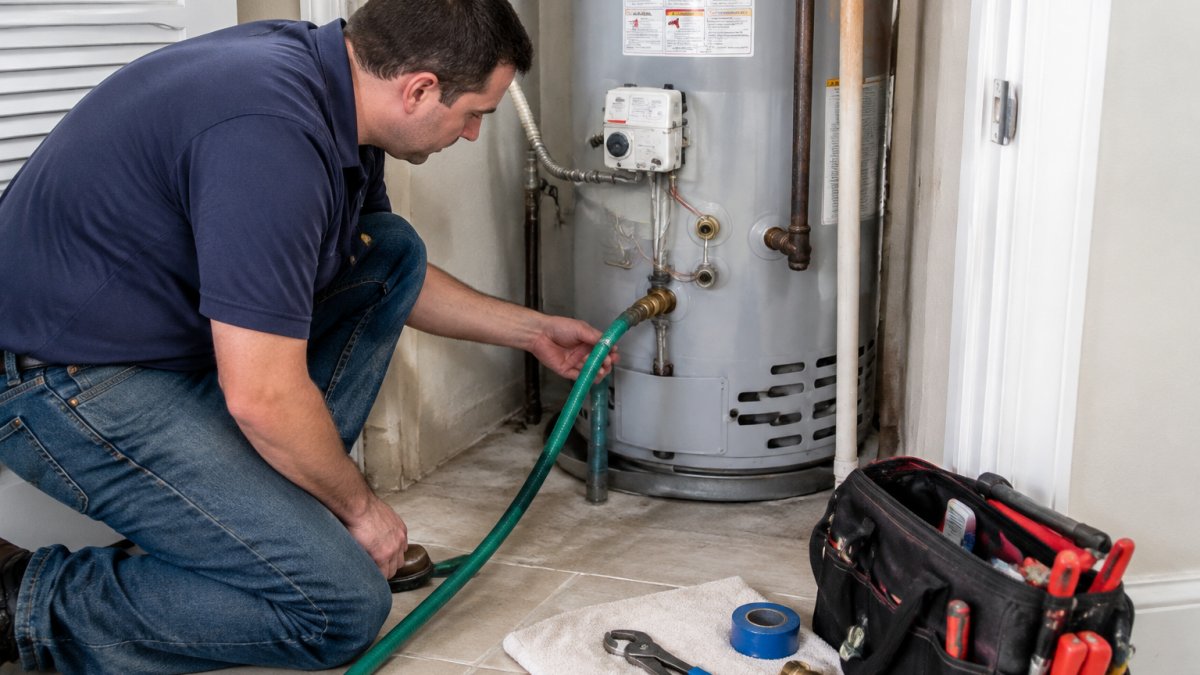
A basic tank flush is the most common fix for sediment popping, and it’s a manageable task for many homeowners. The key is to work in a safe sequence, know what to watch for at each stage, and stop if anything feels wrong. Gas and electric units carry different hazards, so read the cautions for your heater type before you start.
Before you touch anything: a safe first-check sequence
Work through these checks in order. If any check fails, stop and call a licensed plumber rather than pushing ahead.
- Confirm the noise is popping, crackling, or rumbling, not banging, knocking, or hissing, which can point to pressure or valve issues
- Look for water at the base of the tank, rust streaks, or corrosion on fittings; if you see any, stop
- Check the pressure-relief valve and its discharge pipe for dripping or signs of recent discharge
Watch out: On a gas unit, do not proceed if you smell gas or see a yellow, lazy flame or scorching around the burner access panel, leave the area and call your gas utility or 911.
Shut down safely: electric vs. gas
The shutdown step is where homeowners most often create a new problem.
- Electric: Turn off the breaker that feeds the water heater. Do not rely on a wall switch alone. On many electric tanks, the upper heating element can be damaged within seconds if the tank is drained while power is still on.
- Gas: Set the thermostat to the lowest setting or to pilot, and turn off the gas control valve per the manufacturer’s label on the unit. Do not disconnect gas lines yourself.
Then close the cold-water supply valve at the top of the tank.
Flush the tank
- Attach the hose to the drain valve at the bottom of the tank and run the other end to a floor drain or outside.
- Open a hot-water faucet somewhere in the house to let air in and speed draining.
- Open the drain valve and let the tank empty. Watch the first water out, cloudy or gritty water confirms sediment.
- Flush with short bursts: briefly open the cold supply to stir loose sediment, then close it and drain again. Repeat two or three times until the water runs clear.
- Close the drain valve fully, remove the hose, and reopen the cold supply to refill.
- Purge air by letting hot-water faucets run until water flows steadily with no sputtering.
- Restore power or gas only after the tank is full and water runs from the hot tap.
Watch out: Never restore power to an electric heater before the tank is completely full, a dry element can burn out almost immediately, turning a maintenance task into a repair.
What to observe afterward
Expect the noise to fade over a few days as loosened sediment clears. If popping returns quickly, the buildup may be heavy enough to need a professional flush or a heating-element inspection. On electric units, a failed or scaled element can mimic sediment noise, and only a technician can test it safely. On gas units, a burner that keeps popping after a flush may need cleaning or adjustment by a qualified technician.
When to stop and call a pro
Stop the DIY approach and call a licensed plumber if you find a leaking tank, a stuck or dripping relief valve, corrosion at the fittings, a scorched burner area, or repeated popping after two flushes. If the flush drain is also slow, a guide to clearing a clogged drain line covers related steps. A professional can test the relief valve, inspect the anode rod, check the heating element, and tell you whether the tank is a candidate for maintenance or replacement.
The table below summarises the main shutdown and flushing steps covered in the sequence above.
| Step | What to do | Watch out for |
|---|---|---|
| Confirm the noise | Check it is popping, crackling or rumbling | Banging or hissing can signal pressure or valve issues |
| Check for leaks | Look for water at the tank base or rust on fittings | Any leak means stop and call a plumber |
| Shut down electric | Turn off the breaker feeding the heater | A wall switch alone is not enough |
| Shut down gas | Set thermostat to lowest or pilot, close gas valve | Do not disconnect gas lines yourself |
| Close cold supply | Shut the cold-water valve at the top of the tank | Keep hot-water faucets closed during draining |
| Flush the tank | Drain, then flush in short bursts until water runs clear | Repeat two or three times |
| Refill and purge | Close drain, reopen cold supply, run hot taps until steady | Restore power only after the tank is full |
Water Heater Popping Sound After Flushing
Some homeowners notice popping after a flush. This usually happens for one of two reasons. Loosened sediment may still be moving through the tank, which can cause brief noise for a few days.
Give it a few days of normal use. If the popping continues or gets worse, the sediment may not have fully cleared, or the drain valve may not have closed completely.
Why a Brand New Water Heater Is Making a Popping Noise
A new heater can still pop, and the cause is often installation or water conditions rather than wear. The most common reasons include:
- Manufacturing or shipping debris left in the tank
- Hard water beginning to deposit minerals from day one
- Incorrect installation that allows temperature to swing
If a new unit pops within the first few weeks, call the installer or the manufacturer. Many warranties require professional installation, so keep your paperwork handy.
When to Call IRC Plumbing for Water Heater Service in Sebastian
Call a licensed plumber when a flush doesn’t quiet the tank, when you see leaks or corrosion, or when you’re unsure about gas or electrical parts.
For Sebastian homeowners, IRC Plumbing is a licensed, insured, family-owned plumbing company with over 21 years of experience. If you’re ready to get help, find a plumber in Sebastian or read our guide on the signs you need a plumber.
To schedule a visit, contact IRC Plumbing today and we’ll diagnose the problem and recommend the right fix for your home.
Frequently Asked Questions
Is a water heater popping bad?
A popping sound is usually caused by sediment or mineral deposits at the bottom of the tank. Water trapped under that layer heats up and forms steam bubbles that burst through it, which creates the popping. The noise itself is typically a maintenance signal rather than an emergency, but it means the heater is working harder than it should and heating efficiency drops as the buildup grows. Flushing the tank often resolves it. If the noise is accompanied by leaking, rust-colored water, or a pressure-relief valve that is discharging, shut off the power or gas and call a licensed plumber promptly.
Why does a water heater pop after flushing?
Flushing removes loose sediment, but it can stir up deposits that were settled and bonded to the tank bottom. Those fragments may still be sitting in the tank after the flush, and the heating process can cause the popping to continue for a short time. If the noise persists or gets louder after a few days of normal use, the tank may need a more thorough flush, or the drain valve may be partially clogged. Check that the drain valve fully closes and that no debris is blocking it. A plumber can inspect the tank if the noise continues.
Can sediment cause a water heater to pop?
Yes. Sediment is the most common cause of popping in a tank-style water heater. Minerals such as calcium and magnesium carried in hard water settle at the bottom of the tank over time. When the burner or heating element heats the water, the trapped water beneath the sediment layer turns to steam and forces its way up through the deposits, producing a popping or rumbling sound. Regular flushing, typically once a year, helps prevent heavy buildup.