Table of Contents
- Early Warning Signs You Shouldn’t Ignore
- How to Perform a Water Meter Leak Test
- Signs of a Slab Leak and What They Mean
- DIY Detection Methods for Hidden Pipe Leaks
- What Professional Leak Detection Services Involve
- Common Mistakes That Make Hidden Pipe Leaks Worse
- Frequently Asked Questions
Last Updated: September 17, 2026
Early Warning Signs You Shouldn’t Ignore
Learning how to find hidden pipe leaks starts with listening to what your house is already telling you. A hidden pipe leak is water escaping from a supply or drain line inside a wall, under a slab, or beneath a floor, where you cannot see it directly. The damage builds quietly, and by the time water shows up, the repair is usually bigger.
Watch for these early signs:
- A water bill that climbs with no change in habits
- The sound of running water when every fixture is off
- Warm spots on a concrete floor
- Musty smells that never go away
- Paint or drywall that bubbles, stains, or feels soft
- A water meter that never stops spinning
One or two of these can mean nothing. Three or more usually means water is going somewhere it shouldn’t. For a broader look at how these leaks are diagnosed and repaired, see this [overview of leak detection and repair(/leak-detection-and-repair/) from the EPA’s WaterSense program | epa.gov], which explains why early detection matters so much.
Ignoring a slow leak is the most expensive mistake homeowners make. Water quietly rots framing, feeds mold, and can undermine a foundation. A small drip found early is a simple fix. The same drip found six months later is often a remodel.
How to Perform a Water Meter Leak Test
A water meter leak test is the fastest way to confirm you have a hidden leak. It takes about 15 minutes and costs nothing. The test works because your meter only moves when water flows. If nothing is running and the meter still spins, water is escaping somewhere.
Step-by-Step Meter Test Instructions
Here’s how to run the test:
- Turn off every water-using appliance and fixture in the house.
- Shut off the main water valve inside your home.
- Find your water meter, usually near the curb or in a utility box.
- Write down the exact reading, including the small dial.
- Wait 30 to 60 minutes without using any water.
- Read the meter again.
If the reading changed, you have a leak between the meter and your shutoff valve. That points to a buried line outside. If the reading held steady, the leak is likely inside the house. Check the meter’s leak indicator, a small triangle or dial. If it spins while everything is off, water is moving.
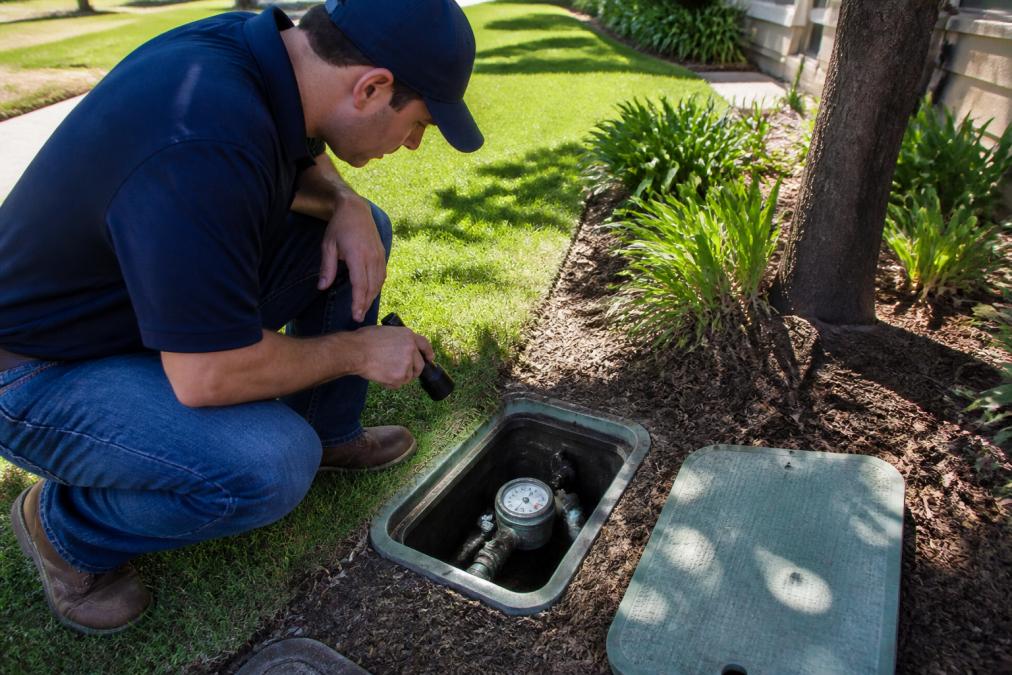
Take a photo of the meter reading with your phone. It’s an easy way to compare readings later, and it gives a plumber a clear starting point if you end up calling one.
Signs of a Slab Leak and What They Mean
The signs of a slab leak are different from a wall leak, and knowing the difference saves time. A slab leak happens when a pipe running under your concrete foundation starts to fail. These leaks are common in older homes with copper lines, and they can be tricky to pin down.
Watch for these slab leak signs:
- Warm or hot spots on the floor
- Cracks in the floor or baseboards
- The sound of running water under the floor
- A sudden jump in your water bill
- Damp carpet or buckling flooring
When to Suspect a Slab Leak vs. a Wall Leak
A wall leak usually shows itself with visible clues. You’ll see stains, bubbling paint, or a soft spot in the drywall. You might smell mildew near an outlet or baseboard.
A slab leak hides better. The first clue is often a warm floor or a sound you can’t place. If you hear water running but can’t see a single sign of it, the slab is the likely culprit. Slab leaks also tend to show up as higher water bills before any visible damage appears.
DIY Detection Methods for Hidden Pipe Leaks
Before you call anyone, a few simple methods can narrow things down. These won’t always pinpoint the exact spot, but they tell you whether you’re dealing with a real leak and roughly where it lives.
Tools You Can Use at Home
You don’t need expensive gear to start. Here’s what works:
- Your ears. Listen at walls and floors at night when the house is quiet.
- A flashlight. Check under sinks, behind toilets, and around the water heater.
- Food coloring. Add a few drops to each toilet tank. If color shows in the bowl without flushing, the flapper is leaking.
- A screwdriver. Press the handle against a wall and your ear to the other end. It works like a stethoscope for water sounds.
- Toilet paper. Wrap it around suspect joints. A dry pipe stays dry. A leaking one shows up fast.
For more on how water systems behave and where leaks tend to form, the CDC guidance on household water systems is a useful reference.
The toilet flapper is the most common hidden leak in any home, and it’s the easiest to fix. Test every toilet with food coloring before you assume the problem is in a wall.
What Professional Leak Detection Services Involve
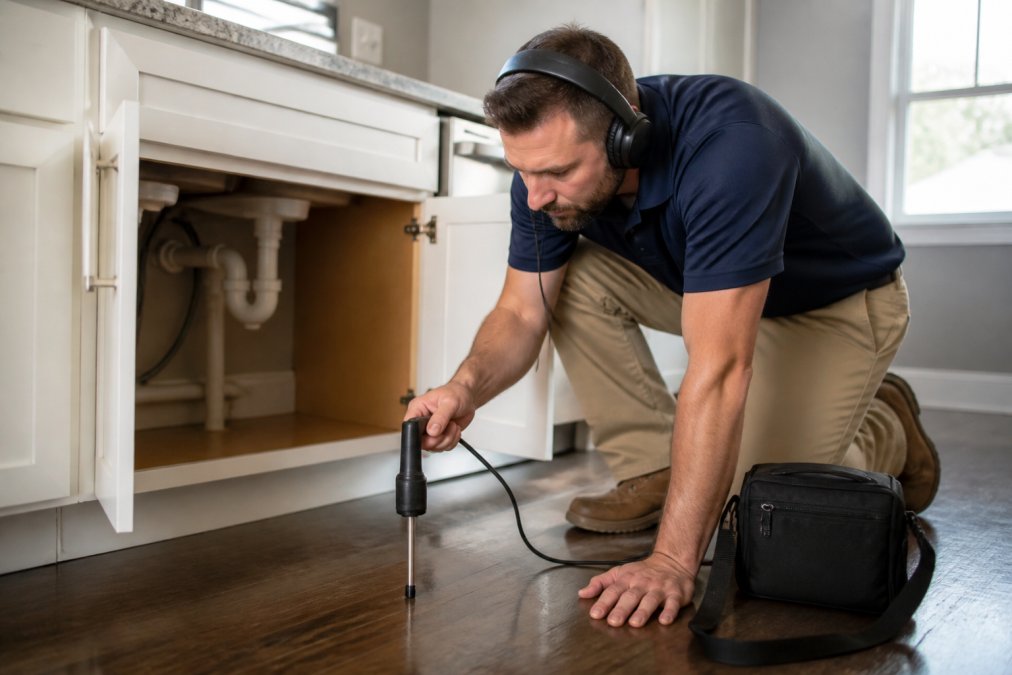
Professional leak detection services find the leak without tearing your house apart. That’s the whole point. A trained technician uses tools that see and hear what you can’t, then marks the exact spot before anyone opens a wall or breaks concrete.
Here’s what the process typically looks like:
| Method | What It Finds | Best For |
|---|---|---|
| Acoustic listening | Leaks by sound | Walls and under floors |
| Thermal imaging | Temperature changes | Slab and wall leaks |
| Pressure testing | Which line is failing | Supply vs. drain lines |
| Video camera inspection | Blockages and cracks | Drain and sewer lines |
| Electronic amplification | Pinpointing the spot | Confirming before repair |
The right combination depends on your home and the symptoms. A good technician starts with the meter test and works from there.
This is where experience matters. IRC Plumbing has spent over 21 years diagnosing leaks across the Treasure Coast, and we’re licensed and insured under #CFCA20364. Efficient diagnosis means less guessing and less unnecessary demolition.
Common Mistakes That Make Hidden Pipe Leaks Worse
The wrong move after spotting a leak can turn a small repair into a major one. Here’s what to avoid:
- Ignoring it to “watch it for a while.” Water damage doesn’t pause.
- Cranking up water pressure to compensate for low flow. That stresses weak pipes.
- Patching drywall over a wet spot without fixing the source.
- Using chemical drain cleaners on a suspected leak. They can eat through failing pipe.
- Breaking into walls at random instead of confirming the location first.
Never open a wall or break concrete based on a guess. Without confirmed detection, you can spend thousands on demolition and still miss the leak. Confirm the location first, then repair.
If you’ve done the meter test and the signs point to a hidden leak, the next step is a professional diagnosis. The American Society of Home Inspectors notes that plumbing problems are among the most common and costly issues found in homes, which is why catching them early pays off.
Frequently Asked Questions
What are the early warning signs of a hidden water leak?
Watch for unexplained spikes in your water bill, the sound of running water when no fixtures are on, damp spots on floors or walls, musty odors, and warm patches on the floor that suggest a slab leak. A water meter leak test can confirm whether water is moving through your system when nothing is running. Catching these signs early prevents costly structural damage and mold growth.
Can I use my water meter to detect a hidden leak?
Yes. Turn off every fixture inside and outside your home, then check the leak indicator on your meter. If it spins or the reading changes over 15 to 20 minutes, water is escaping somewhere. This water meter leak test narrows down whether the leak is inside the house or in the service line. If the indicator stops when you close the main shutoff valve, the leak is inside your plumbing.
How do professionals locate leaks behind walls without damaging drywall?
Professional leak detection services use acoustic listening devices, thermal imaging cameras, and pressure testing to pinpoint leaks without tearing into walls. These tools detect temperature changes and sound patterns that reveal exactly where water is escaping. Once located, repairs can be targeted to a small section, saving you money on unnecessary demolition and restoration work.
What should I do immediately if I suspect a slab leak?
Shut off your main water valve right away to stop the flow. Then call a licensed plumber experienced with signs of a slab leak. Avoid walking on warm floor areas or running appliances that use water. Document any visible damage for insurance. Quick action limits water damage to your foundation and flooring, which can cost thousands to repair if left unchecked.
A hidden pipe leak won’t fix itself, and waiting only raises the cost. IRC Plumbing finds leaks fast with expert detection tools, then repairs them right the first time. As a family-owned business with three generations of experience, we handle everything from slab leaks to whole-house re-pipes and kitchen and bath remodels. Schedule a service with IRC Plumbing and get a clear diagnosis, honest answers, and work you can trust.