Table of Contents
- Hire a Plumber for a Bathroom Remodel: What the Job Actually Covers
- Bathroom Remodel Plumbing Cost: What Drives the Estimate
- Bathroom Plumbing Rough-In: The Stage That Decides Your Budget
- Bathroom Remodel Plumbing Timeline: A Step-by-Step Hiring and Build Schedule
- Questions to Ask a Plumber Before Hiring
- How to Verify a Licensed Plumber and Vet References
- Verdict: How to Hire a Plumber for a Bathroom Remodel Without Regrets
- Frequently Asked Questions
Last Updated: October 4, 2026
Hire a Plumber for a Bathroom Remodel: What the Job Actually Covers
A bathroom remodel lives or dies on the plumbing, and that work is not a general contractor’s job.
Bathroom remodel plumbing is the licensed trade work that moves, replaces, or connects the water supply lines, drain lines, vents, and fixtures in a bathroom. It is separate from the cosmetic work (tile, paint, cabinetry) and separate from the structural work a general contractor manages.
Most guides treat the plumber as one subcontractor among many. In practice, the plumber is often the first trade in and the last trade out, and every delay ripples through the project.
Plumber vs. General Contractor vs. Remodeling Contractor
A licensed plumber performs and permits the plumbing work itself. A general contractor manages the overall project, schedules trades, and holds the contract. A remodeling contractor typically handles design and construction management for renovations, often acting as the general contractor on residential jobs.
The distinction decides who pulls which permit. In most jurisdictions, plumbing permits must be pulled by a licensed plumbing contractor, not a general contractor.
When to Bring a Plumber Into the Project
Bring a plumber in before demolition, not after. A plumber who sees the existing layout can flag undersized supply lines, corroded drains, or venting problems while there’s still time to plan.
Three situations demand a plumber from day one:
- Any change to the fixture layout (moving a toilet, sink, or shower)
- Any sign of past leaks, slow drains, or low water pressure
- Any home older than roughly 30 years where the piping type is unknown
For a cosmetic refresh that keeps every fixture in place, a plumber may only be needed for final connections. For plumbing relocation, they own the job.
Bathroom Remodel Plumbing Cost: What Drives the Estimate
Bathroom remodel plumbing cost is driven by scope, access, and existing pipe condition, not room size. A small bathroom with a moved toilet and new supply lines can cost more than a larger one where every fixture stays put. A real estimate has five separate buckets, ask every plumber to break the bid into them.
The Five Buckets Inside a Plumbing Estimate
1. Labor. The plumber’s time: rough-in, trim-out, and diagnostics. Labor scales with how many fixtures move, how far, and how hard the wall or floor is to open.
**2.
3. Rough-in changes. New drain lines, moved supply lines, re-vented stacks, and any subfloor or framing repair the plumbing exposes.
**4.
5. Contingency. A remodel that opens walls will find something.
What Actually Moves the Number
- Fixture count and relocation. Moving a drain means cutting subfloor and framing and re-pitching to code. Every inch of run and every fitting adds labor and material.
- Pipe material and age. Replacing galvanized or polybutylene costs more than tying into copper or PEX, because the old material has to come out and transition correctly at the tie-in.
- Access. A slab foundation means breaking and patching concrete; a second-floor bathroom with a finished ceiling below means opening the ceiling or working through an access panel.
We don’t publish flat pricing because a real number depends on what’s behind the wall. Ask any plumber for a written scope before you ask for a number, itemized into the five buckets above. A plumber who won’t break the bid down prices by feel.
Hourly Rate vs. Flat-Rate Bids
An hourly rate bills for time plus materials, which works for diagnostics and small repairs. A flat-rate bid prices the whole job up front, which is what you want for a remodel.
Flat-rate protects you from a job that drags; hourly protects the plumber from hidden surprises. For remodel work, insist on flat-rate pricing with a written scope, and treat open-ended hourly as a red flag.
Red Flags in a Written Quote
A quote that says “plumbing work as needed” is not a quote. It’s a placeholder. Watch for:
- No permit line item, or a promise to “skip the permit to save you money”
- No named fixtures or rough-in locations
- No allowance for unforeseen pipe repair
A quote that omits the permit is not a discount, it’s a liability transfer. Unpermitted plumbing can surface during a future home sale inspection and force you to open finished walls to make it legal.
Ask for the bid in five lines: labor, fixtures, rough-in changes, permits, contingency. If a plumber can’t produce those five lines, you can’t compare their bid to anyone else’s, and you can’t tell a fair price from a padded one.
Bathroom Plumbing Rough-In: The Stage That Decides Your Budget
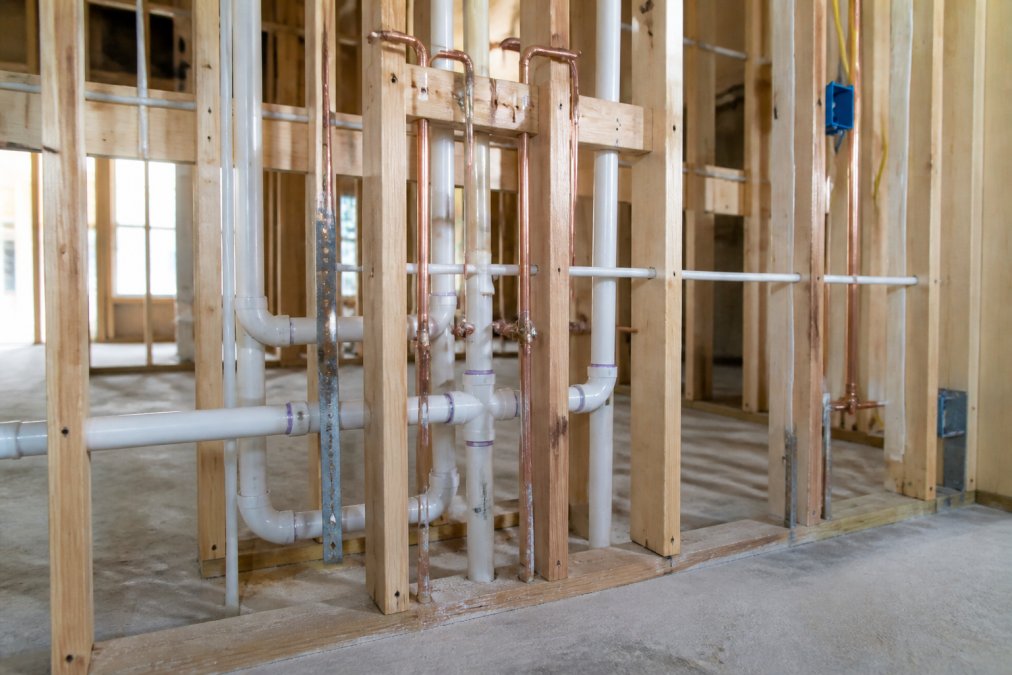
Bathroom plumbing rough-in is the phase where supply lines, drain lines, and vents are installed inside the open walls before drywall and tile go up. It is the most expensive stage to redo, because correcting it means demolition.
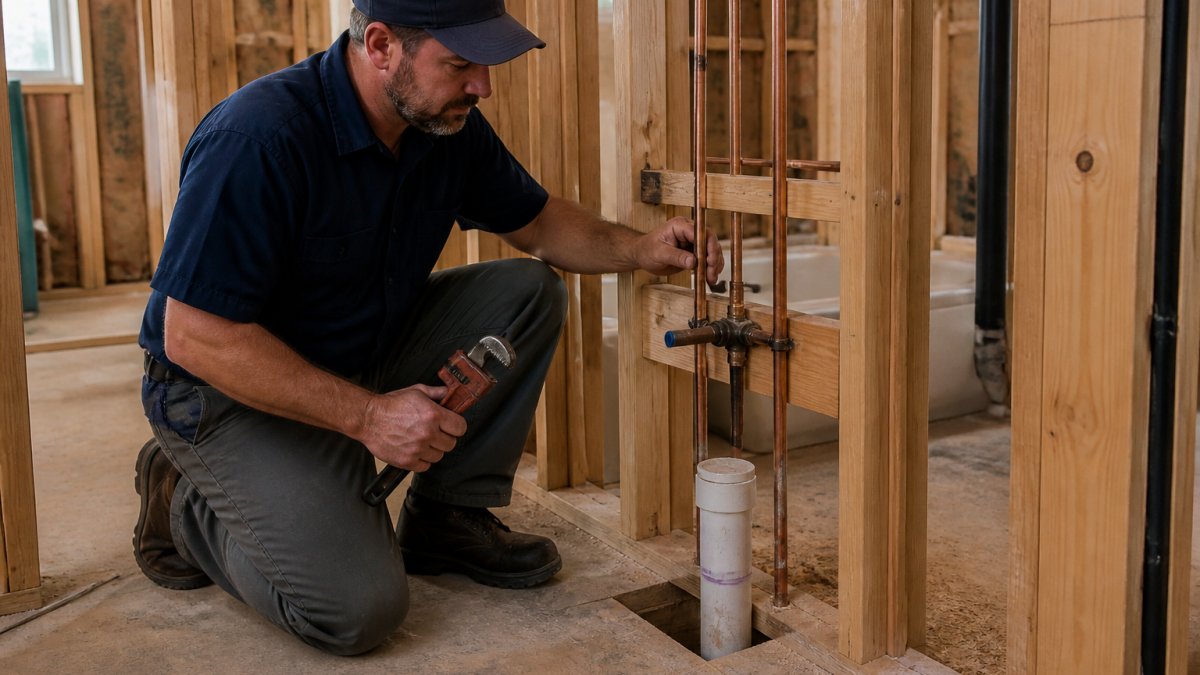
Rough-in is where the tile setter, drywall contractor, and electrician all wait on the plumber, if rough-in slips, the whole schedule slips.
Take photos of the open wall after rough-in passes inspection, before drywall goes up. If a leak appears years later, those photos tell a repair plumber exactly where every line runs without exploratory demolition.
Bathroom Remodel Plumbing Timeline: A Step-by-Step Hiring and Build Schedule
A typical bathroom remodel plumbing timeline runs from a few days for a simple fixture swap to two weeks or more when lines are relocated, spread across the full project schedule. The table below is the sequence we walk homeowners through, what saves you is knowing who waits on whom at each stage.
| Stage | What Happens | Who Is Waiting | Typical Duration |
|---|---|---|---|
| 1. Scope and walkthrough | Plumber inspects existing lines, confirms what moves | Nobody yet | 1 visit |
| 2. Written quote and contract | Flat-rate bid, permit responsibility named | Homeowner decision | 3-7 days |
| 3. Permits | Permit pulled, inspection scheduled | Plumber, before demo | Varies by jurisdiction |
| 4. Demolition | Old fixtures and finishes removed | Plumber, tile setter | 1-3 days |
| 5. Rough-in | New supply, drain, and vent lines installed | Tile setter, drywall, electrician | 1-5 days |
| 6. Rough-in inspection | Code official signs off before walls close | Everyone | Scheduled by jurisdiction |
| 7. Walls and finishes | Drywall, tile, paint by other trades | Plumber, at trim-out | 1-2 weeks |
| 8. Fixture installation | Toilet, sink, shower, faucet set, trim-out | Tile setter, painter | 1-2 days |
| 9. Final inspection | Code official signs off on completed work | Nobody, project closes | Scheduled by jurisdiction |
When to Contact a Plumber (Before You Buy Anything)
Contact a plumber at the design stage, before you buy a single fixture. The fixture you pick determines the rough-in dimensions, and those determine whether the plumbing can be done at all.
A plumber who sees the existing layout before demolition can flag undersized supply lines, corroded drains, or venting problems while there’s still time to plan. Once the wall is open, options narrow and change orders start.
What to Confirm Before Demolition Starts
Before a single tile comes off the wall, confirm these in writing:
- Permit is pulled and posted. The permit card should be on site, not “in the truck.”
- Rough-in locations are marked. The plumber should mark studs and subfloor exactly where each supply and drain lands, so the tile setter and drywall contractor can frame and back the walls correctly.
- Fixture cut sheets are on site. The plumber needs spec sheets for the toilet, sink, shower valve, and tub so the rough-in matches the product.
How Plumbing Fits the Remodel Sequence
The plumbing trade touches the project at three points, and each handoff can go wrong.
Point 1: Rough-in, before walls close. The plumber installs supply, drain, and vent lines.
Point 2: Waterproofing and tile, after rough-in passes. The tile setter waterproofs and tiles over the inspected rough-in.
Point 3: Trim-out, after tile and paint. The plumber returns to set the toilet, sink, shower trim, and faucet and make final connections.
Scope-Based Decision Guide: Plumber Alone vs. General Contractor
Not every bathroom job needs a general contractor. Use this to decide which project you have.
Plumber alone is enough when:
- Every fixture stays in its current location.
- The work is a fixture swap, leak repair, or valve replacement.
- You’re managing tile, paint, and drywall yourself or with separate trades.
You need a general contractor (with the plumber as a subcontractor) when:
- Walls are moving, which means framing, drywall, and possibly structural work.
- The layout is changing, so plumbing, electrical, and possibly HVAC all move together.
- You want one contract, one schedule, and one point of accountability.
You need a designer or architect when:
- The layout change requires moving a load-bearing wall.
- The project adds square footage or changes the bathroom’s footprint.
- You want a permit set of drawings for a major remodel.
The practical rule: if plumbing is the only trade moving, hire the plumber directly. If it’s one of several trades moving, hire a general contractor and let them hold the plumber’s contract.
Permits, Inspection, and Building Code Checkpoints
Two inspections typically apply: a rough-in inspection before walls close, and a final inspection after fixtures are set. Skipping either one is the most common costly mistake in a remodel.
Building code governs drain slope, vent sizing, and the minimum distance between fixtures. For the current adopted code in your area, check your local building department, and for the national model code most jurisdictions base theirs on, see the International Code Council’s International Plumbing Code.
Put the rough-in inspection date on the same calendar as the tile delivery. If the tile shows up before the inspection passes, you will be tempted to start, and starting early is how a failed inspection turns into a demolished wall.
The two dates that decide your timeline are the rough-in inspection and the final inspection. Everything else can flex. Those two cannot, because a code official has to be there, and the work behind the wall has to be right before it closes.
Questions to Ask a Plumber Before Hiring
The best questions to ask before you hire plumber force a specific answer: who pulls the permit, what’s in the written scope, and what happens if the rough-in turns up a problem. Vague answers predict a vague job.
Ask every candidate:
- Are you licensed and insured, and what’s your license number?
- Who pulls the plumbing permit, you or me?
- Is this a flat-rate bid or hourly?
The permit question is the fastest filter. A plumber who pulls permits is working to code and putting their license on the line. A plumber who suggests skipping it is telling you how the rest of the job will go.
How to Verify a Licensed Plumber and Vet References
Verifying a licensed plumber takes about fifteen minutes and it’s the highest-return fifteen minutes of the whole project. Start with your state or local licensing board, which maintains a public lookup by license number.
Then check references properly. Ask for two or three recent bathroom projects and actually call.
At IRC Plumbing, we’re licensed and insured under License #CFCA20364, and we tell every homeowner to verify that number independently before signing.
Homeowners who want a plumber who pulls the permit, provides a written flat-rate scope, and stands behind the rough-in after the walls close.
Verdict: How to Hire a Plumber for a Bathroom Remodel Without Regrets
The homeowners who regret their remodel almost always made the same mistake: they hired on price alone and never pinned down the scope in writing.
Our recommendation is simple. Get a flat-rate written quote, confirm the permit is included, verify the license number yourself, and call references before you sign.
If you’re planning a bathroom remodel in the Treasure Coast area and want a licensed, insured plumber who pulls the permit and stands behind the rough-in, IRC Plumbing is ready.
Frequently Asked Questions
How much does it cost to redo plumbing in a bathroom?
There is no single figure because the scope varies so much. A fixture swap costs far less than a full rough-in with relocated drain lines. What drives your number: whether walls open, how far drains and supply lines move, permit fees, and whether the existing plumbing system needs upgrades while it is exposed. Ask every bidder to itemize labor, materials, permits, and drywall repair separately so you can compare bids line by line instead of guessing.
Can a plumber do a bathroom remodel, or do I need a general contractor?
A licensed plumber can handle the plumbing scope: rough-in, drain lines, water supply lines, venting, and fixture installation. A full remodel also involves tile, drywall, electrical, and painting, which fall to other licensed trades. Some plumbers act as the coordinating remodeling contractor; others work under a general contractor. Ask upfront who is pulling permits and who schedules the tile setter and drywall contractor, because unclear responsibility is where most projects stall.
Should I hire a plumber or a general contractor for a bathroom remodel?
Match the choice to your scope. If you are only replacing a toilet, faucet, or showerhead, hire a plumber directly. If you are moving walls, relocating fixtures, or upgrading electrical, a general contractor who subcontracted a licensed plumber is usually the cleaner path. For a mid-range remodel with no structural changes, a plumber who regularly runs bathroom projects can serve as your lead. The deciding factor is who will manage permits, inspections, and the other trades.
What should I ask a plumber before signing a bathroom remodel contract?
Ask for the license number and proof of insurance, then verify both with your state or local licensing authority. Ask whether permits and inspections are included, and who schedules them. Ask how change orders are priced if rough-in reveals corroded pipes or code violations. Request two or three references from similar bathroom projects completed in the past year, and ask whether the same crew that starts the job will finish it. Get all of it in the written quote before you pay a deposit.
How long does the plumbing portion of a bathroom remodel take?
Rough-in typically takes one to three days once demolition exposes the walls, and fixture installation adds another day at the end. The plumbing timeline stretches if you relocate the toilet or shower, because drain lines need slope and venting that may require opening more wall. Inspection scheduling can add several days depending on your local building department. Build those gaps into your overall schedule rather than assuming the plumber works continuously from demo to final walkthrough.