Table of Contents
- What Drives the Cost of a Whole House Repipe
- PEX vs Copper Repipe Cost: Material and Labor Breakdown
- How Long Does a Whole House Repipe Take?
- Signs You Need to Repipe Your House
- Hidden Costs: Drywall Repair, Paint, and Restoration
- Financing, Insurance, and Resale Value
- Frequently Asked Questions
Last Updated: September 20, 2026
What Drives the Cost of a Whole House Repipe
The cost of a whole house repipe depends on four variables: the size of your home, how many fixtures need connecting, local labor rates, and the material you choose. A repipe is not a flat-rate job, which is why two neighbors with similar houses can receive very different quotes.
Square Footage and Pipe Runs
Square footage sets the baseline. A larger home needs longer pipe runs, more fittings, and more labor hours to route lines through walls, attics, and crawl spaces. A single-story home with a straightforward layout is the simplest job. Multi-story homes and slab foundations add complexity because plumbers must find routes that avoid cutting into structural elements.
Fixtures, Labor, and Permit Fees
Every plumbing fixture adds a connection point. Bathrooms are the most fixture-dense rooms in a house, so a home with three full baths takes longer than one with a single bath. Kitchen remodels and laundry rooms add their own connections.
PEX vs Copper Repipe Cost: Material and Labor Breakdown
PEX generally costs less than copper in both material and labor, but the gap is not uniform across the country. Material cost is roughly national, while labor cost swings widely by region, and labor is the larger line item in almost every repipe estimate. That means the same PEX job can land at very different totals in a high-cost metro versus a lower-cost market, even with identical pipe quantities.
Material and Labor, Side by Side
| Material | Relative Material Cost | Relative Labor Time | Typical Install Method | Main Trade-Off |
|---|---|---|---|---|
| PEX-A | Lowest | Lowest | Expansion tool stretches pipe over fitting | Requires a specialized expansion tool and certified installer |
| PEX-B | Low | Low | Crimp ring at each fitting | More fittings than PEX-A, but tools are cheaper and more widely available |
| Copper | Highest | Highest | Soldering or press fittings | Longest service life, slowest install, most expensive |
A useful rule of thumb: PEX-A and PEX-B land in a similar total-cost band, with PEX-A slightly higher on tooling and PEX-B slightly higher on fitting count. Copper typically runs meaningfully higher than either PEX option because both the material and the labor hours increase. The exact spread depends on your region’s labor rate and how much wall opening the routing requires.
Why Labor, Not Pipe, Drives the Total
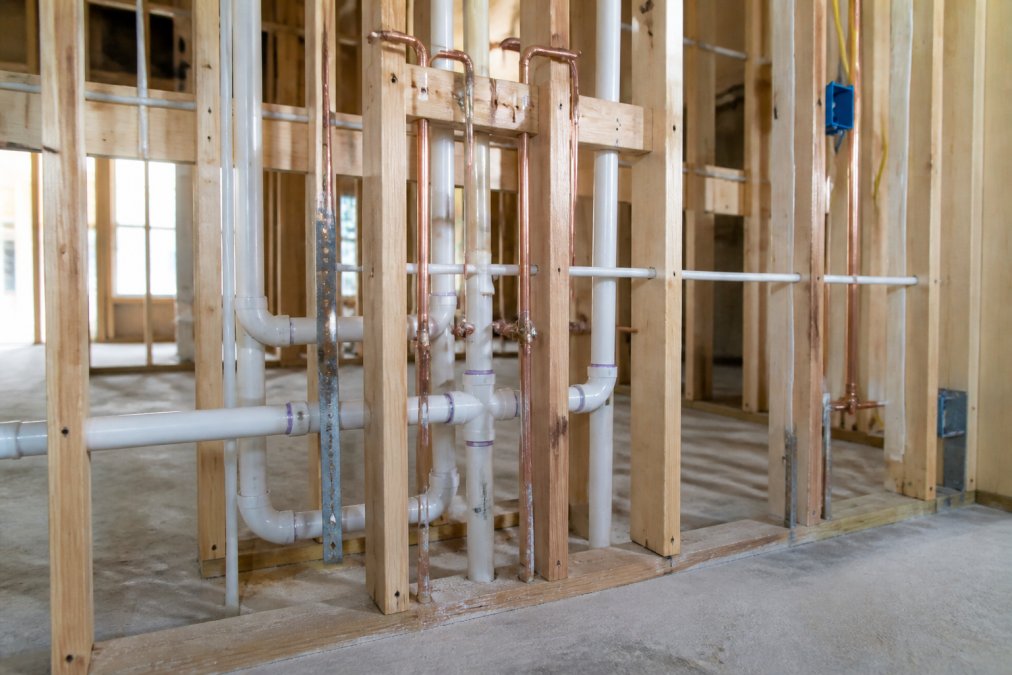
Pipe itself is a small fraction of a repipe invoice. The bulk is labor hours: opening walls, routing lines, making connections, pressure testing, and closing up. Copper takes longer at every one of those steps because every joint must be soldered or pressed, and soldering requires a hot-work permit in some jurisdictions. PEX comes in flexible coils, so a single run can often reach a fixture with fewer fittings and less wall cutting, which is where the labor savings come from.
Regional Cost-of-Living Adjustment
This is the angle most repipe guides skip. The same scope of work prices differently depending on where you live, because labor rates, permit fees, and inspection timelines all vary by market. A repipe that lands in the low five figures in a high-cost coastal metro may land in the mid four figures in a lower-cost inland market for an identical home.
PEX-A vs PEX-B: The Tooling Difference Matters
Ask your contractor which PEX grade they use and why. A plumber who defaults to PEX-A for tight runs and PEX-B for open runs is thinking about your layout, not just their material inventory.
For a deeper look at the trade-offs, the U.S. Department of Energy guide to PEX and copper plumbing covers material performance and installation considerations.
How Long Does a Whole House Repipe Take?
A typical whole house repipe runs two to five working days for an average single-family home, but the number that matters is not the calendar range, it is how many crew members are on site and how many fixture connections they have to make. A two-bath, single-story home on a crawl space with 12 to 16 fixture connections is a different job than a three-bath, two-story home on a slab with 22 to 28 connections, even if both are 2,000 square feet.
A Realistic Day-by-Day Breakdown
- Day 1, Isolation and staging. The crew locates and tags the main shut-off, installs a temporary bypass if the home will need water overnight, and stages pipe, fittings, and tools. On slab homes, this is also when the crew maps the under-slab routing to minimize concrete cutting. Expect water off for two to four hours.
- Day 2, Rough-in, part one. New supply lines are pulled through attics, crawl spaces, or wall cavities. On a two-story home, this is the longest single day because vertical chases take time to open and route. Water is typically off for most of the day.
- Day 3, Rough-in, part two and fixture stubs. Lines are run to each fixture location and stubbed out. Bathrooms and kitchens are the slowest rooms because of the number of connections per square foot.
- Day 4, Pressure test and inspection. The system is charged and held at test pressure (commonly 100 psi for a minimum of 30 minutes, though your local building department sets the exact requirement). The inspector signs off before walls close. This is the one step you cannot compress.
- Day 5+, Restoration. Drywall patching, texture matching, and paint. This is often subcontracted and can add one to three additional days depending on how many access points were opened.
What Actually Changes the Timeline
- Crew size. A two-person crew on a 2,000-square-foot home is a four-to-five-day job. A four-person crew on the same home can finish rough-in in two days. Ask how many people will be on site, not just how many days.
- Foundation type. Slab homes require cutting and patching concrete, which adds a day or more versus a crawl space or basement.
- Fixture count. Each bathroom adds roughly half a day of connection work. A half-bath adds less; a kitchen with a pot filler and a laundry with a utility sink each add their own connections.
- Access. Finished basements, tile showers, and cabinetry that must be pulled and reset all extend the schedule.
- Inspection scheduling. In busy jurisdictions, the inspector may not be available the same day the test passes. Build in a buffer.
Living Through the Repipe
Most homeowners stay in the house. Plan for water to be off for several hours on rough-in days, and expect the crew to need access to every room with a fixture. If you work from home, schedule the noisiest days, slab cutting or wall opening, for days you can be elsewhere. A good contractor will give you a written daily schedule before the job starts, not a verbal ‘about a week.’
Ask your contractor for the inspection window in writing. If the building department cannot inspect until day five, the crew should not be closing walls on day four.
Signs You Need to Repipe Your House
You likely need a repipe if you see recurring pinhole leaks, discolored water, or a sudden drop in water pressure across multiple fixtures. These symptoms point to system-wide corrosion rather than a single bad pipe.
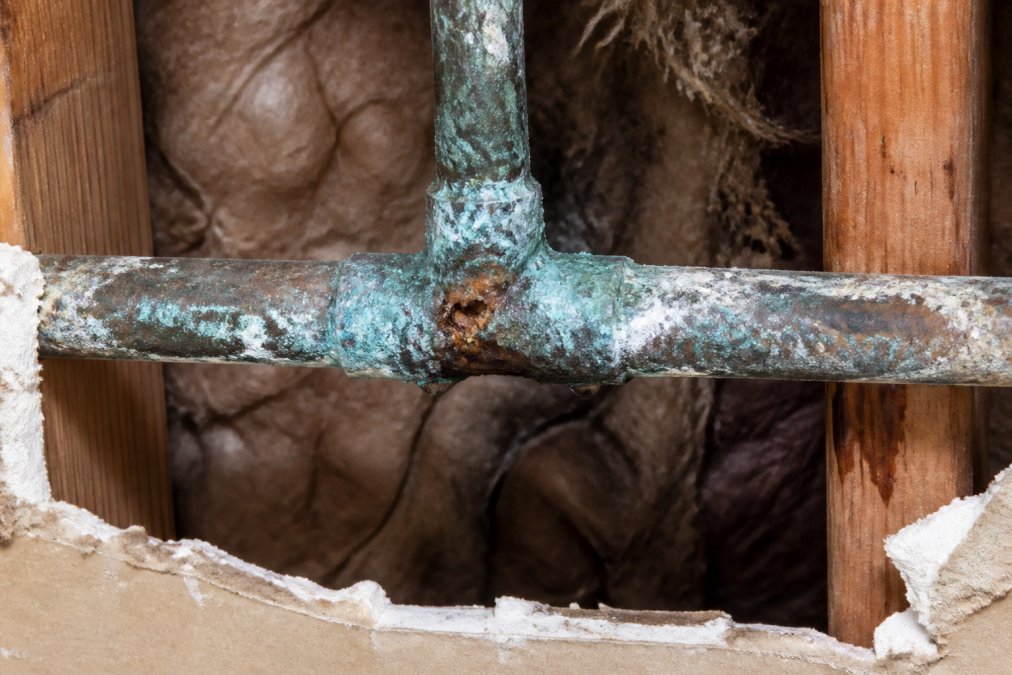
Watch for these signals:
- Pinhole leaks that keep appearing in different spots
- Brown or yellow water from multiple faucets
- Water pressure that drops when two fixtures run at once
- Visible corrosion or mineral buildup on exposed pipes
- Galvanized steel lines that have never been replaced
- A home inspection that flags the supply lines
Ignoring recurring pinhole leaks rarely saves money. Each emergency repair costs more than the last, and a burst pipe behind a wall can cause water damage that far exceeds the price of a repipe.
Hidden Costs: Drywall Repair, Paint, and Restoration
Drywall repair and paint are the most overlooked line items in a repipe budget. Opening walls to route new pipe is unavoidable, and someone has to patch, texture, and paint those openings afterward.
Costs to plan for include:
- Drywall patching at each access point
- Texture matching so patches blend with existing walls
- Interior paint touch-ups or full-room repainting
- Exterior patching if lines run through exterior walls
- Fixture trim replacement for shower valves and faucets
Financing, Insurance, and Resale Value
Homeowners insurance rarely covers a repipe itself, but it often covers damage from a sudden burst pipe. That distinction matters: maintenance-related corrosion is typically excluded, while sudden water damage may be covered. Review your policy before you assume either way.
A repipe is one of the few home improvements that pays off twice: it ends the leak cycle now and answers buyer questions at resale.
Frequently Asked Questions
How much does it cost to repipe a 2,000 sq ft house?
The cost of a whole house repipe for a 2,000 sq ft home depends on pipe material, fixture count, and local labor rates. PEX typically costs less than copper because the materials are cheaper and installation is faster. A repipe estimate will factor in square footage, the number of bathrooms and kitchens, and whether the walls are finished. Request a quote from a licensed plumbing contractor for an accurate figure.
Will homeowners insurance pay for a whole house repipe?
Homeowners insurance generally does not cover the cost of a whole house repipe because it is considered a maintenance issue, not a sudden accidental event. Insurance may cover water damage caused by a burst pipe or pinhole leak, but the pipe replacement itself is usually out of pocket. Review your policy and ask your adjuster specifically about repiping coverage before starting the project.
Is repiping a house worth the investment?
Repiping is often worth it when your home has galvanized steel or aging copper pipes with recurring leaks, low water pressure, or rust-colored water. A new PEX or copper system can last decades, reduce the risk of water damage, and improve resale value. If you plan to stay in the home long-term, repiping usually costs less than repeated emergency repairs and restoration.
What are the primary differences between PEX and copper piping?
PEX is flexible, cheaper to install, and resists corrosion, making it a common choice for repipes. Copper is rigid, durable, and has a longer track record, but it costs more in materials and labor. PEX-A and PEX-B differ in connection method and flexibility. A plumbing contractor can recommend the best option based on your home’s layout, water chemistry, and budget.
How long does a whole house repipe project typically take?
Most whole house repipe projects take 2 to 5 days for an average home, depending on square footage, fixture count, and whether walls are opened. Larger homes or those with complex layouts can take a week or more. Drywall patching and painting are usually done after the plumbing work and add additional time. Ask your contractor for a project timeline before work begins.
What are the signs that your home needs a full repipe?
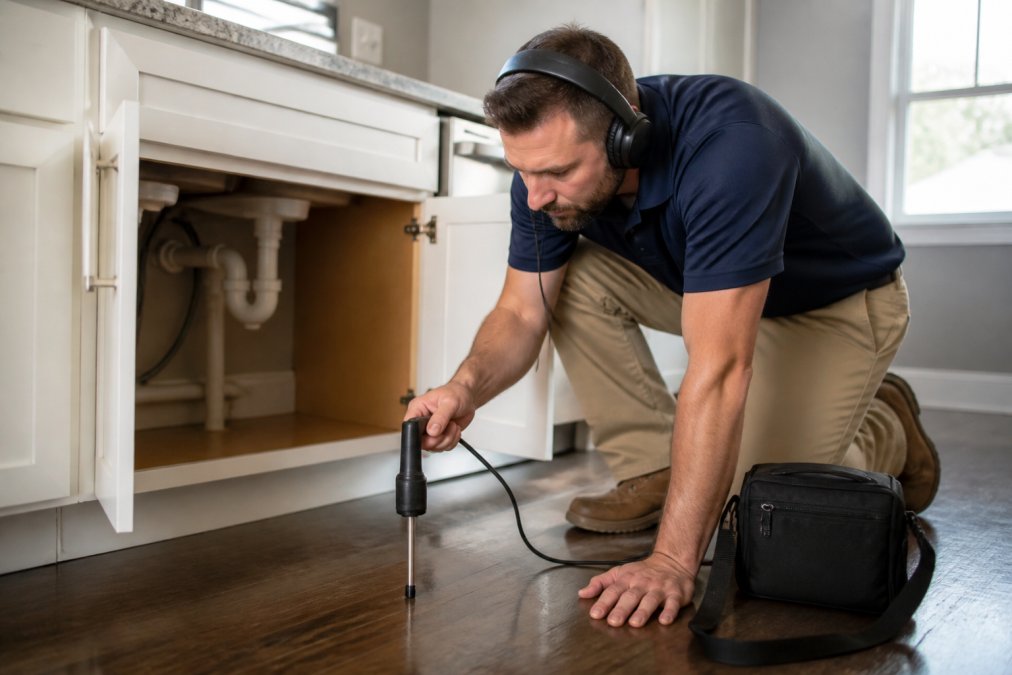
Common signs include frequent pinhole leaks, discolored or rusty water, low water pressure throughout the house, and visible corrosion on exposed pipes. If you have galvanized steel pipes, they are likely past their lifespan. A home inspection or leak detection service can confirm whether a full repipe is needed or if repairs will suffice.