Last Updated: November 24, 2026
Quick Summary
Bathroom plumbing cost in a remodel depends mainly on whether the fixtures stay in their original locations, how many fixtures are involved, and the condition of the existing pipes. Keeping fixtures in place is usually the least expensive route, while moving them adds new drain, supply and venting work. Exact pricing depends on your home, so a licensed plumber should inspect the bathroom in person.
- Keeping fixtures in their original spots is usually the least expensive route.
- Each sink, toilet, shower, or tub needs its own supply and drain connections.
- Old galvanized or cast iron pipe may need replacement before new fixtures go in.
- Relocated drains must still slope correctly toward the main line.
- Ask for rough-in priced separately from fixture set and final connections.
Table of Contents
- What Drives Bathroom Plumbing Cost in a Remodel
- Rough-In Plumbing Cost Per Fixture
- Cost to Move Bathroom Plumbing to a New Layout
- Bathroom Plumbing Labor Cost Breakdown
- Bathroom Remodel Plumbing Permit Requirements in Sebastian, FL
- Older Homes and Coastal Plumbing Considerations
- Getting an Itemized Plumbing Estimate for Your Bathroom Remodel
- Frequently Asked Questions
What Drives Bathroom Plumbing Cost in a Remodel
Most homeowners ask this question before they’ve even picked a tile. Plumbing is the part of a bathroom remodel that is hardest to see, and it is often the part that surprises people on the final invoice. The biggest factor is whether the plumbing stays where it is or moves.
When planning a bathroom remodel, it helps to think about three things first: how many fixtures are involved, whether the drain and supply lines stay in their current location, and what condition the existing pipes are in. A straight swap of a toilet or vanity on the same wall is a very different job from adding a shower where a tub used to be.
Here is what typically moves the number up or down:
- Number of fixtures: Each sink, toilet, shower, or tub needs its own supply and drain connections.
- Fixture location: Keeping fixtures in their original spots is usually the least expensive route.
- Pipe condition: Old galvanized or cast iron pipe may need replacement before new fixtures go in.
- Access: Plumbing behind finished walls or on a second floor takes more labor than plumbing in an open crawlspace.
Exact pricing depends on the specifics of your home and project, so the most reliable step is to have a licensed plumber look at your bathroom in person. For current pricing, visit the IRC Plumbing website or request a quote.
Rough-In Plumbing Cost Per Fixture
Rough-in plumbing is the work done before the walls are closed up. It includes running supply lines, drain lines, and vent pipes to where each fixture will sit, then pressure-testing the system so the inspector can sign off. Many remodelers underestimate this stage because it is out of sight once the drywall goes up.
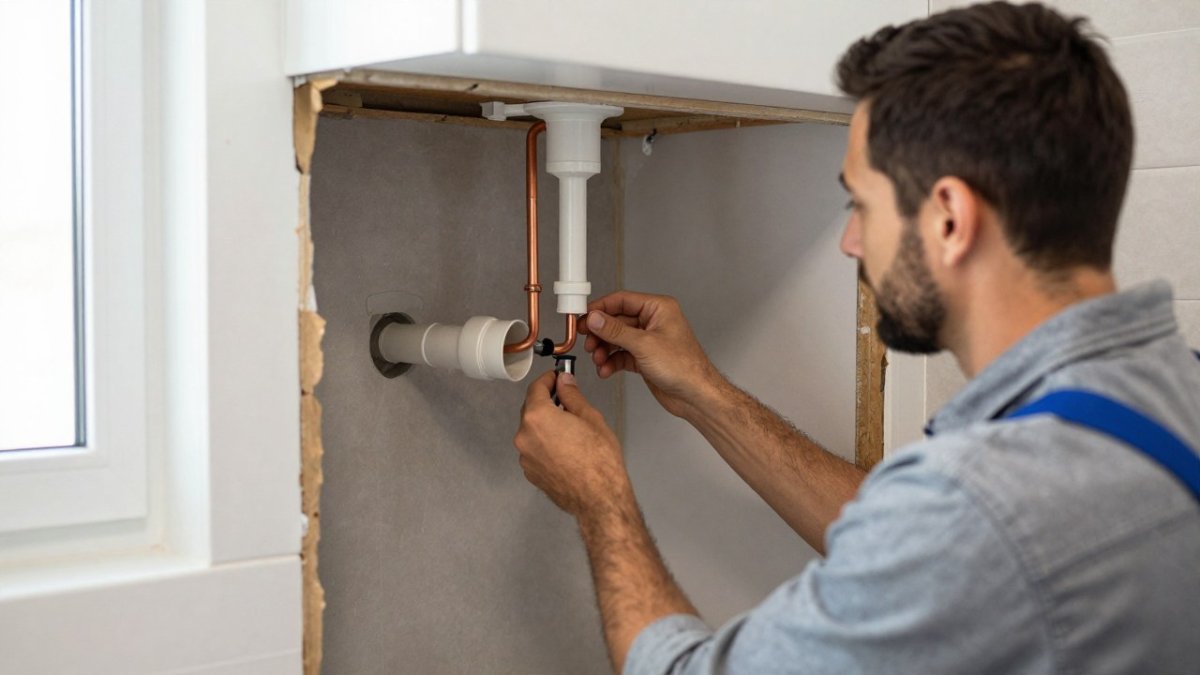
!A plumber in work clothes inspecting exposed copper supply lines and PVC drain pipes behind a bathroom wall framed for a remodel
Rough-in work is often scoped per fixture, with each fixture carrying its own connection count. A toilet needs one drain and one cold supply. A sink needs a drain plus hot and cold supplies. A shower or tub needs a drain, a mixing valve, and often a separate vent tie-in. That is why a half bath with a toilet and sink roughs in for less than a full bath with a tub, shower, and double vanity.
Factors that affect rough-in scope:
- Fixture count and type. Each added fixture adds a drain, a supply set, and venting work. A freestanding tub with a floor-mounted filler costs more to rough in than a standard alcove tub because the supply and drain must come up through the floor.
- Distance from existing lines. The farther a new fixture sits from the main stack and existing supply trunk, the more pipe, fittings, and labor the run requires.
- Open wall versus closed wall. Rough-in during a full gut where studs and subfloor are exposed is the least expensive scenario. Rough-in that requires opening finished walls, cutting tile, or trenching a slab adds demolition and patching labor on top of the plumbing work.
- Vent routing. Every drain needs a vent. If the existing vent stack cannot serve a relocated fixture, the plumber must run a new vent through the wall or roof, which is a separate scope item.
- Pipe material. Copper, PEX, and PVC each carry different material and labor costs. A repipe during rough-in is priced separately from new-fixture rough-in.
Ask for the rough-in portion broken out separately from fixture set and final connections so you can see what each fixture adds. If a quote lists only one lump sum for “plumbing,” you cannot tell whether the rough-in was priced for an open-wall gut or a closed-wall retrofit, and those are very different jobs.
Watch out: a rough-in quote that excludes venting, pressure testing, or inspection re-visits is not comparable to one that includes them. Confirm in writing that the rough-in price covers the drain, supply, and vent work for every fixture plus the test the inspector will require.
The table below summarises the main factors that change rough-in scope for each fixture.
| Factor | Effect on rough-in | Note |
|---|---|---|
| Fixture count and type | Each added fixture adds drain, supply and venting work | Freestanding tubs cost more than alcove tubs |
| Distance from existing lines | More pipe, fittings and labor | Farther runs cost more |
| Open wall vs closed wall | Open walls are least expensive | Finished walls add demolition and patching |
| Vent routing | New vent may be needed | Separate scope item |
| Pipe material | Copper, PEX and PVC carry different costs | Repipe is priced separately |
Cost to Move Bathroom Plumbing to a New Layout
Moving plumbing can significantly increase the cost of a bathroom remodel. Relocating a toilet a few feet, or shifting a shower to the opposite wall, means new drain lines, new supply runs, and often new venting. Existing floor and wall sections may also need to be cut open.
Many remodels stay within the original footprint for this reason. If a layout change is important to you, plan for it early in the design process. Changing your mind after the rough-in is done is far more expensive than deciding before demolition starts.
Keep in mind that relocated drains must still slope correctly toward the main line. A plumber will check this before any concrete or tile goes down.
Bathroom Plumbing Labor Cost Breakdown
Labor is a significant part of bathroom plumbing cost, and it is an area homeowners often find confusing. Plumbers bill for diagnosis, rough-in, fixture installation, testing, and cleanup, but the way those hours are packaged varies widely from shop to shop.
Common billing models you may encounter on a bathroom remodel estimate:
- Hourly plus materials. The plumber bills time at a published rate and adds materials at cost plus a markup. This is common for small repairs and for work where the scope is uncertain until walls are open. The risk shifts to the homeowner if the job runs long.
- Flat rate per task. The plumber publishes a set price for defined tasks, such as setting a toilet or installing a vanity faucet. Flat-rate pricing makes comparison easier because the number does not move with the clock, but the scope of each task must be defined in writing.
- Project bid. The plumber quotes one price for the full plumbing scope. This model can help protect the homeowner from surprises, provided the scope is detailed enough to compare against other bids.
Within any of those models, labor breaks into phases that should appear as separate line items on a good estimate:
- Demolition support. Disconnecting and capping existing fixtures before the tile and drywall come out.
- Rough-in. Running supply, drain, and vent lines and pressure-testing them for inspection.
- Fixture set. Setting the toilet, sink, tub, or shower and making the connections.
- Final connections and trim. Installing the faucet, shower trim, supply stops, and drain assemblies after tile is finished.
- Testing and punch list. Verifying no leaks, checking flow and drainage, and returning for any callbacks.
Several factors can push the labor portion up or down. Access is a major one: plumbing in an open crawlspace or a gutted bathroom generally takes less time than the same work behind finished walls or on a second floor. Scheduling and travel arrangements can also affect the labor portion of an estimate. And a plumber who has to coordinate around other trades, such as waiting for tile or drywall, may build scheduling time into the bid.
Watch out: an estimate that bundles labor into one vague number hides whether the plumber priced the rough-in for an open-wall gut or a closed-wall retrofit. Ask for labor broken out by phase, and ask whether the rate is hourly, flat rate, or a project bid, so you are comparing like with like.
Bathroom Remodel Plumbing Permit Requirements in Sebastian, FL
Plumbing work in a bathroom remodel often requires a permit, depending on local requirements. Permits help ensure rough-in and final work are inspected before walls are closed. Skipping them can cause problems when you sell the home or file an insurance claim.
Permit fees are set by the local building department and vary by project scope, so check with the local building office before you start.
Plan for inspection time in your remodel schedule. Work must be visible and ready when the inspector arrives, which generally means rough-in should be finished and tested before drywall goes up.
Older Homes and Coastal Plumbing Considerations
Older homes often have galvanized steel or cast iron pipe that has reached the end of its service life. Replacing these lines during a remodel can add cost, but it is usually easier to do while walls are open.
Coastal properties bring their own considerations. Salt air and humidity can speed corrosion on exposed fittings and water heaters, so material choice matters.
If your home is older, ask the plumber to inspect the existing lines before finalizing the remodel plan. Finding a pipe problem early costs far less than finding it after new tile is installed.
Getting an Itemized Plumbing Estimate for Your Bathroom Remodel
An itemized estimate is the best tool for comparing bathroom plumbing quotes. It should list each fixture, the rough-in work for each, any layout changes, permit fees, materials, and labor. A single lump-sum number makes it hard to tell what you are paying for.
When requesting a plumbing quote, ask for:
- A line-by-line breakdown of rough-in, fixture installation, and connections
- Any layout change costs listed separately
- Permit and inspection fees
- A note on what is excluded, such as tile work or drywall
Compare quotes using the same scope. Two estimates for different amounts of work are not directly comparable. Learn more about hiring a licensed plumber before you decide who should do the work. Schedule a service with IRC Plumbing to discuss your bathroom remodel and request an itemized estimate.
Frequently Asked Questions
Is $5000 enough to remodel a bathroom?
A limited budget may cover a cosmetic refresh, such as a new vanity, faucet, toilet and paint, but a full remodel that moves plumbing often requires a larger budget. Rerouting supply and drain lines, adding fixtures or replacing a tub with a shower adds labor and materials that can consume much of that budget quickly. Before committing, get an itemized plumbing-only estimate so you can see how much of your budget is left for finishes and tile. If the plan requires relocating the toilet or tub, plan for a larger budget or phase the work.
How much does rough-in plumbing cost per fixture?
Rough-in plumbing cost per fixture depends on how far the new supply and drain lines must run and whether walls and floors need to be opened. Adding a sink, toilet or shower each carries its own labor and materials, and the cost rises when a fixture is moved rather than replaced in place. Ask any contractor to price each fixture separately in your quote so you can compare scopes accurately. For current pricing, visit the IRC Plumbing website or request a written estimate for your specific bathroom.
Does moving a toilet or shower increase bathroom plumbing costs?
Yes. Moving a toilet or shower usually requires new drain routing, a vent connection and new supply lines, which means more labor and possibly opening the floor or wall. Keeping fixtures in their existing locations is typically the lowest-cost route, because the current rough-in can often be reused. If you plan to relocate fixtures, confirm with your plumber whether the new drain slope and venting are workable before finalizing the layout.
How can I estimate plumbing costs for a small bathroom remodel?
Start by listing every plumbing fixture in the new design, then note whether each one stays in place or moves. Fixtures that stay put generally cost less to reconnect than those requiring new lines. Request an itemized estimate that separates plumbing labor, materials, permit fees and any demolition, so you can compare bids on equal terms. Reviewing the estimate line by line helps you spot scope gaps and build a contingency for surprises once walls are opened.